
Last updated August 25, 2026
Free on-site gate assessment - hinges, posts, and your LiftMaster or Nice gate operator checked before anything is quoted
The assessment is free and the quote is the invoice.

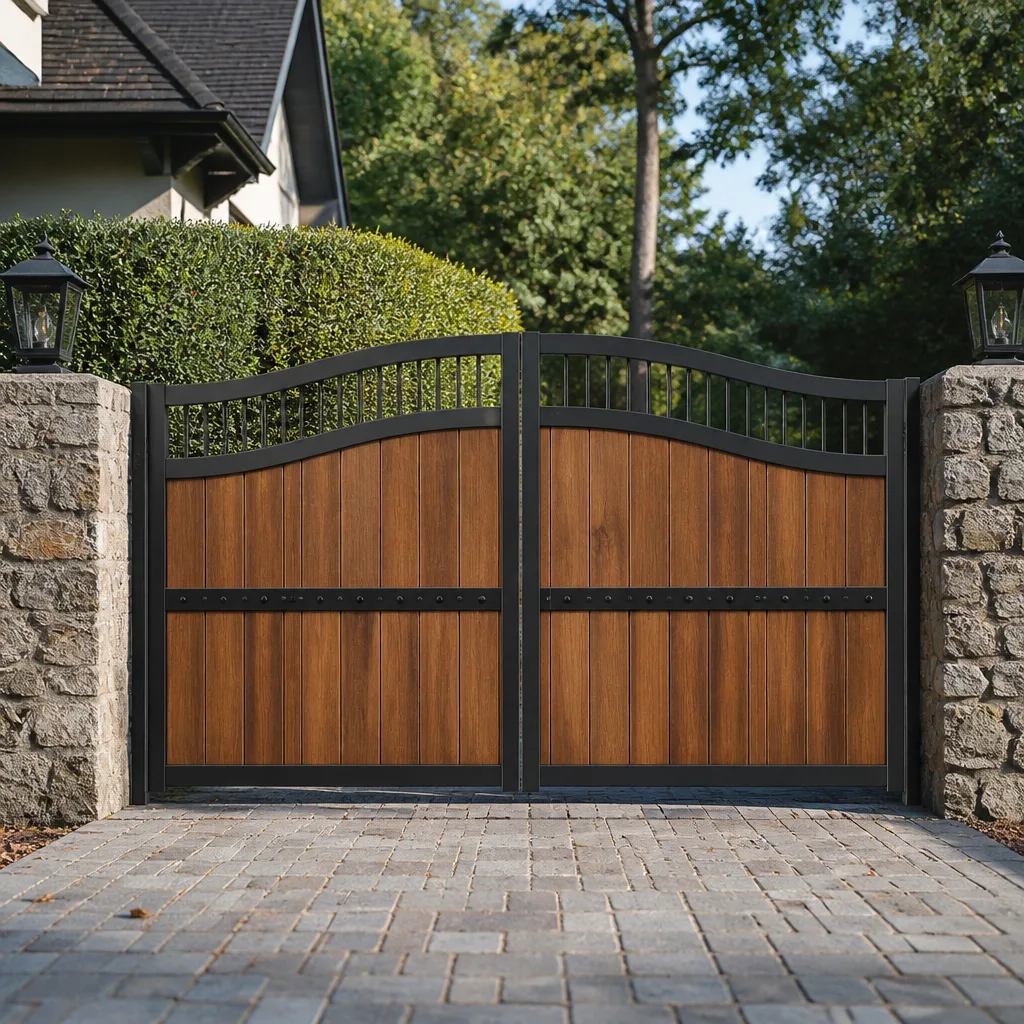
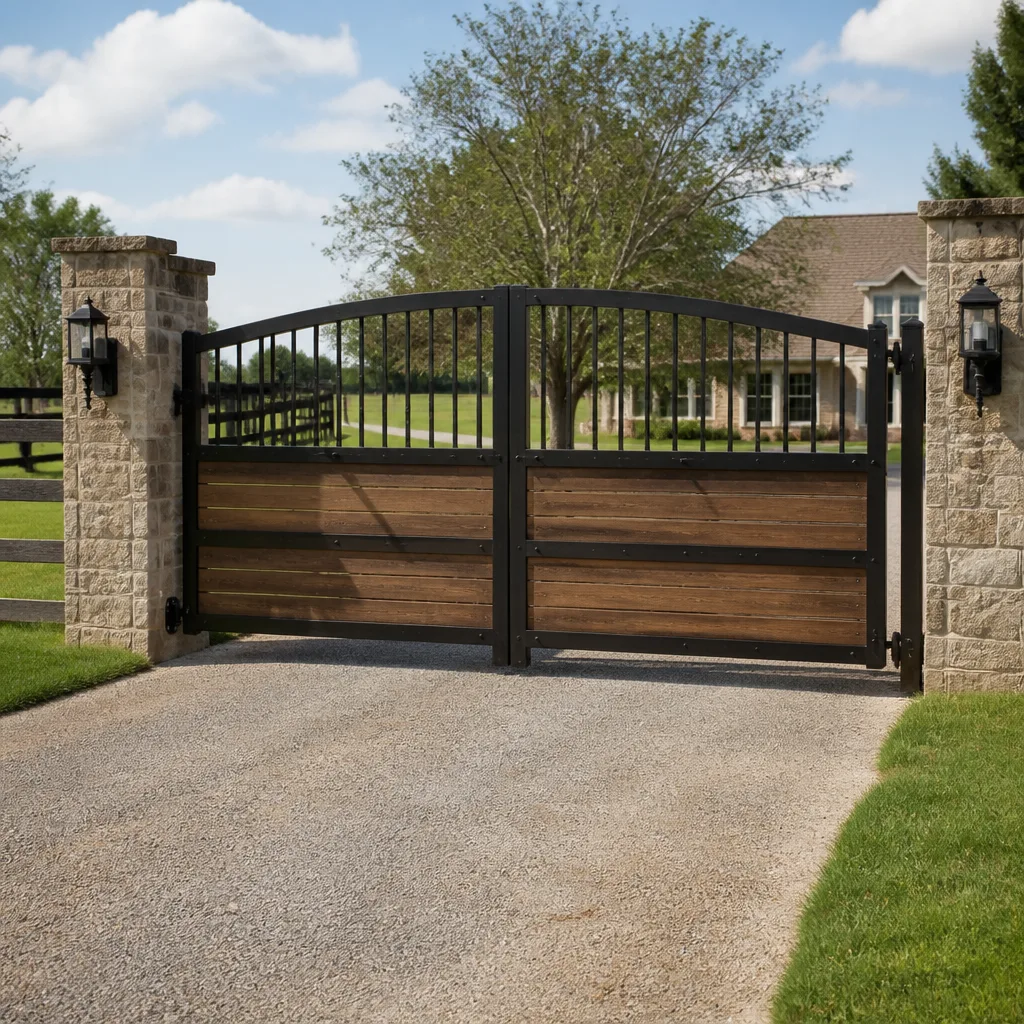
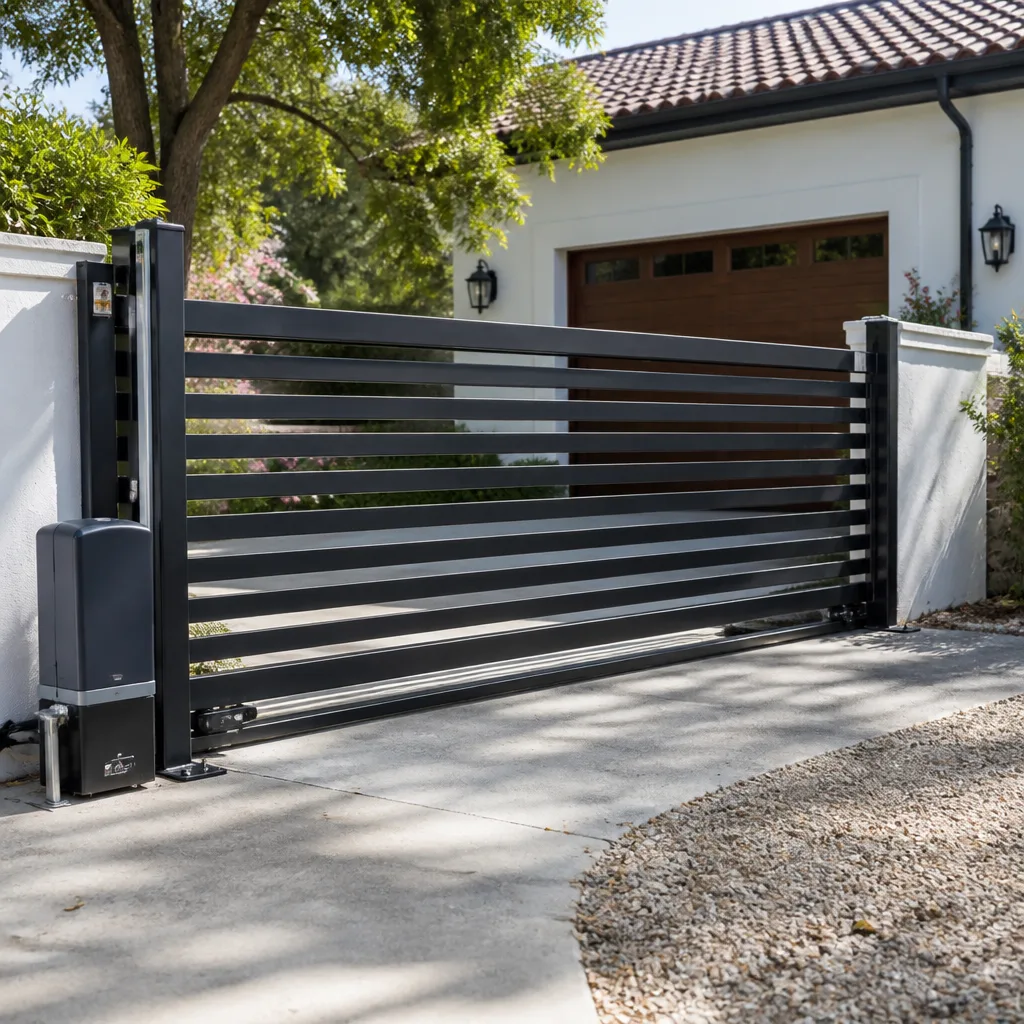
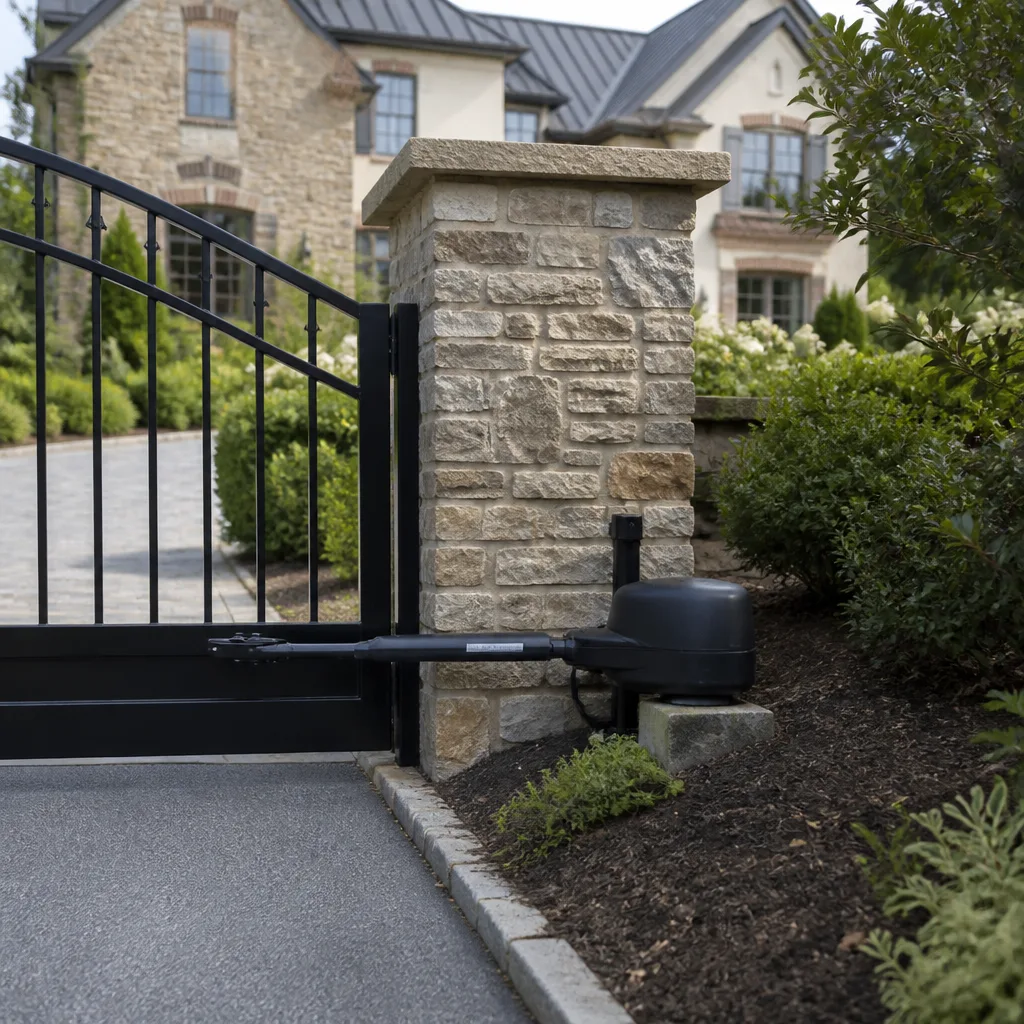
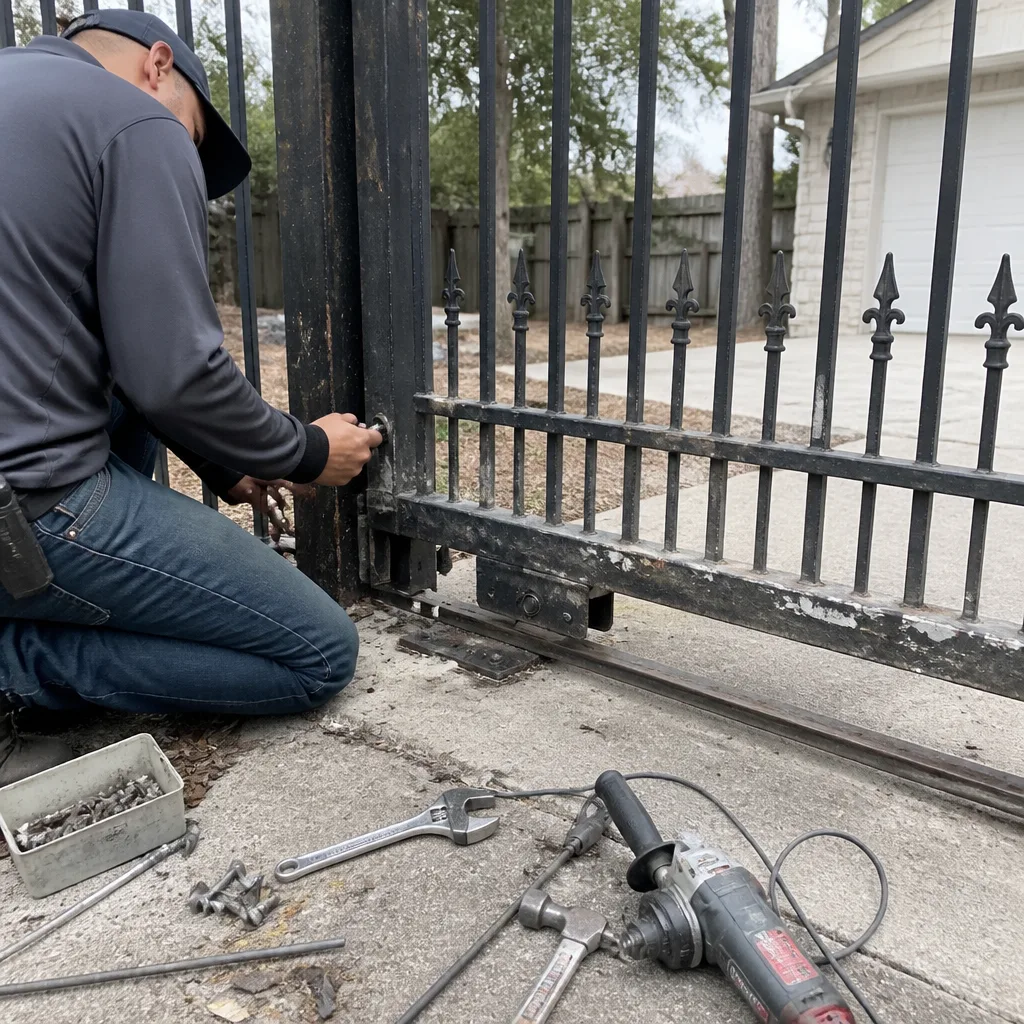 Before
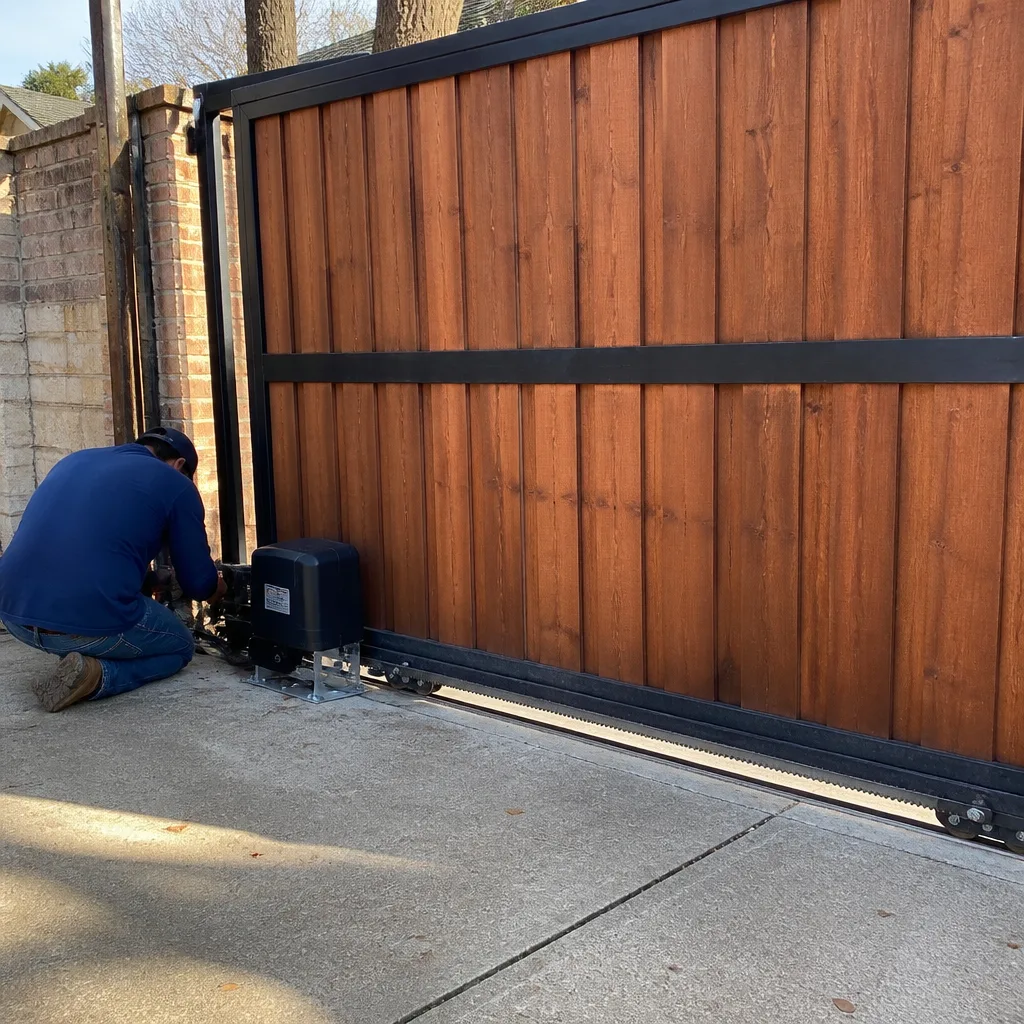 After
After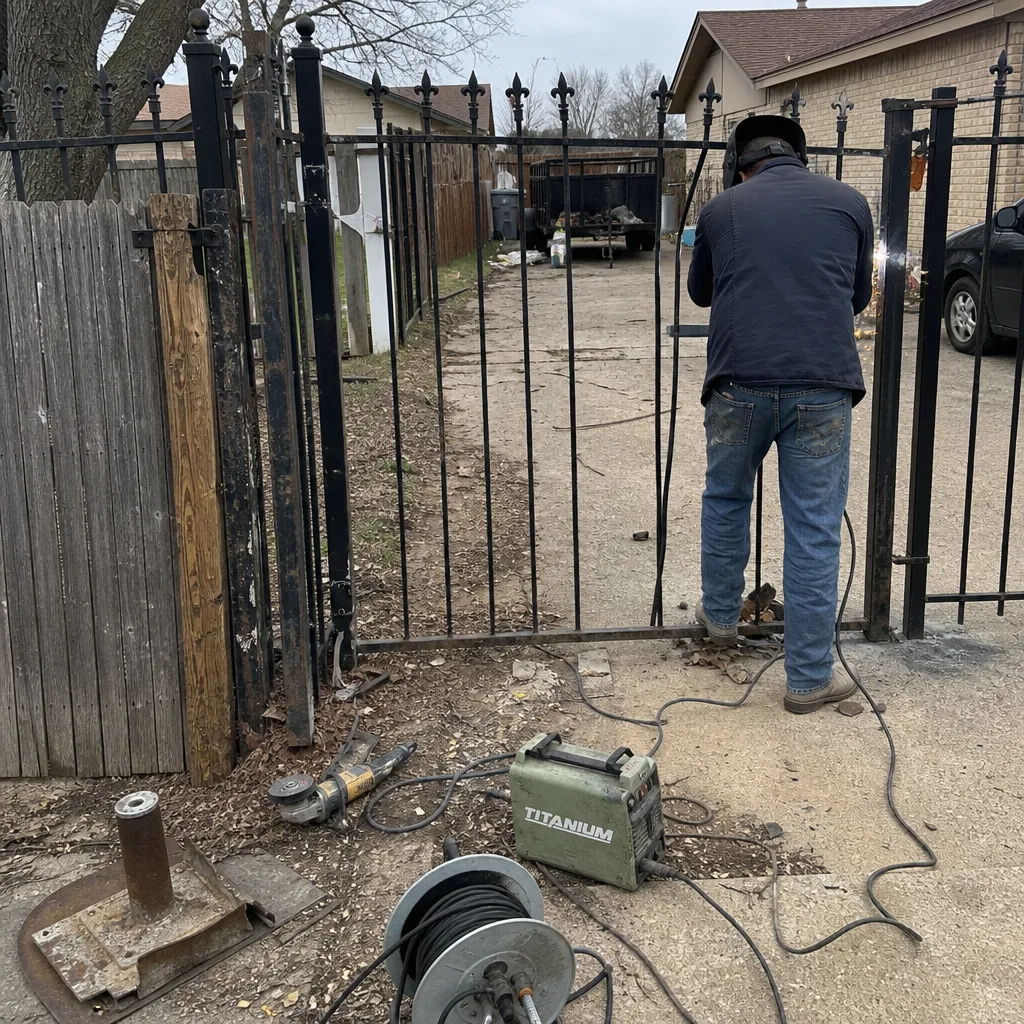 Before
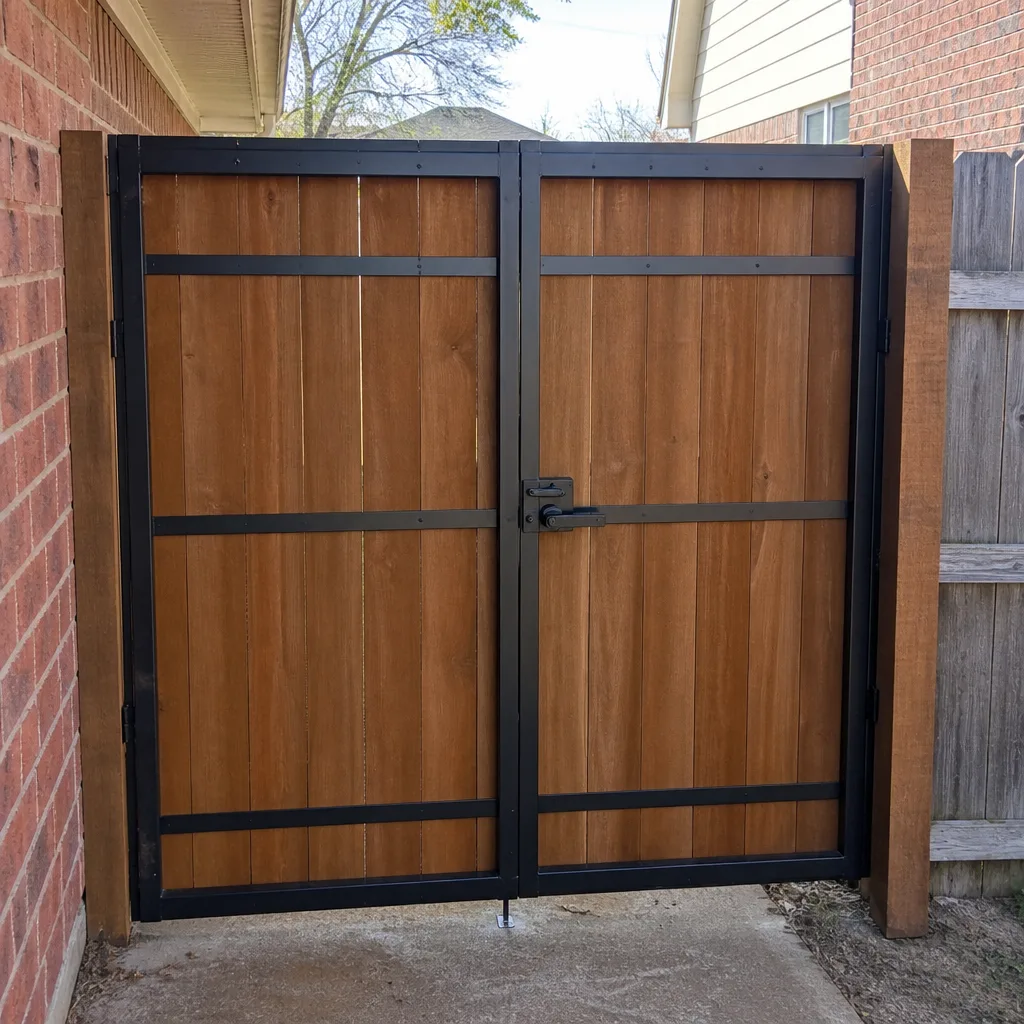 After
After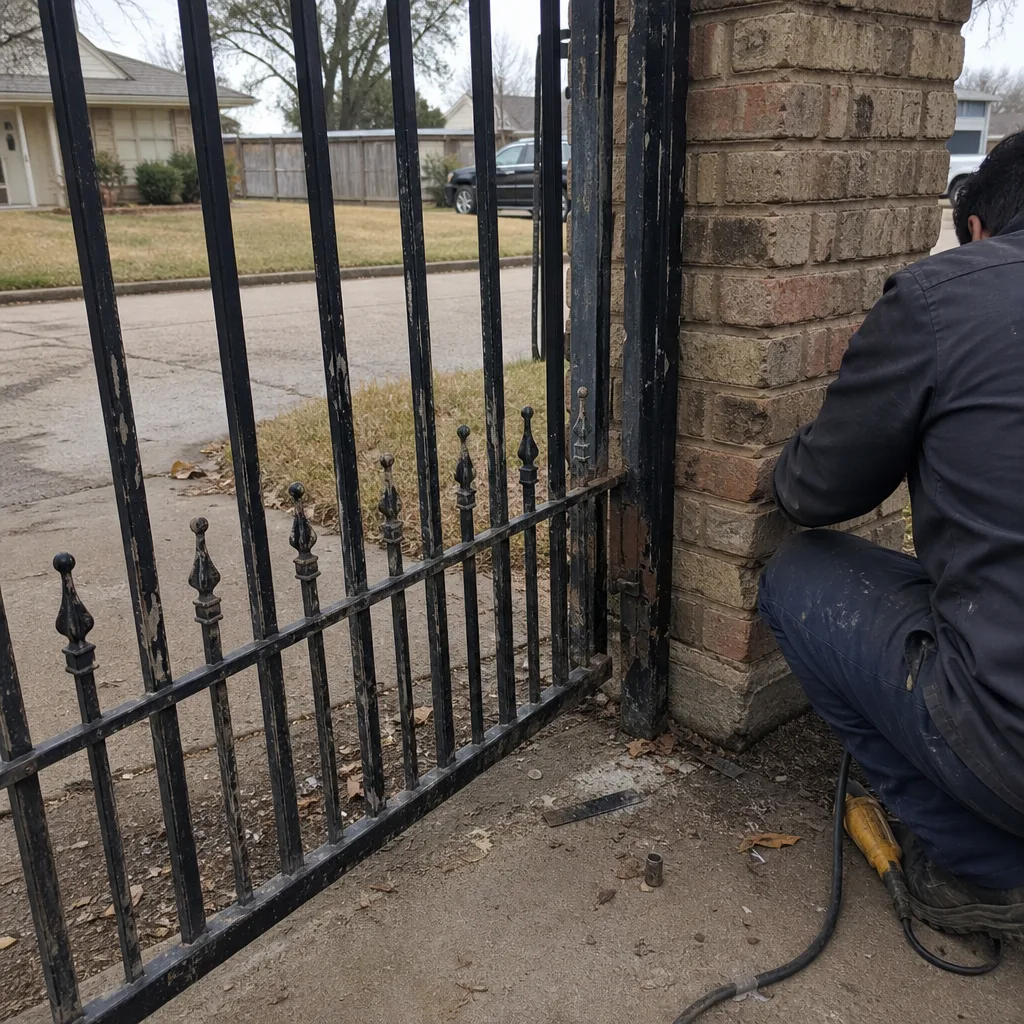 Before
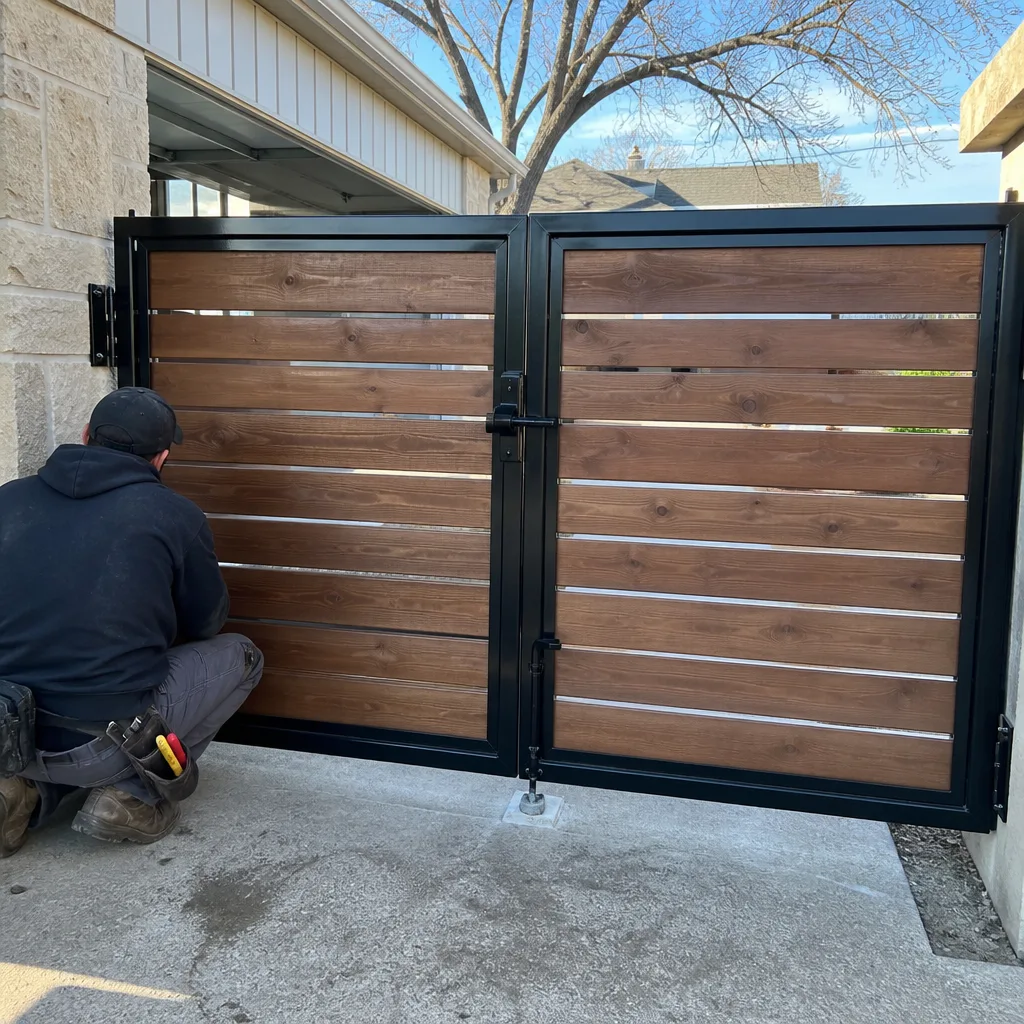 After
AfterGate Repair Permits, Codes & Inspections in TX: What You Need to Know
Here’s something most homeowners don’t learn until a project stalls: in much of Texas, the gate itself rarely triggers a permit, but the things that make it work often do. The low-voltage wiring, the operator, the concrete pad, the safety sensors - those are where cities, counties, and HOAs start asking questions. This guide walks through what actually requires a permit, which codes apply, when inspections happen, and how to avoid the expensive mistakes we see around Duncanville and the southern Dallas suburbs. Whether you’re repairing an existing gate or planning a full replacement, you’ll finish this page knowing exactly what your city expects before anyone turns a wrench.
Quick Answer
Most Texas cities do not require a permit to repair an existing residential gate in kind - replacing hinges, welding a cracked frame, or swapping an opener - because the gate is treated as a fence, and fence repairs are typically exempt. What does commonly trigger permits and inspections is new construction that changes access or safety systems: adding a new driveway, installing an opener with a new electrical circuit, mounting a concrete pad, or placing a gate within a utility easement. In Duncanville, fence and gate permits run through the city’s Building Inspections division, and the determining factors are usually the gate’s height, its location relative to the front setback, and whether automation introduces new wiring.
Table of Contents
- Do You Need a Permit to Repair a Gate in Texas?
- When a Permit IS Required: The Full List
- Texas Gate Codes That Apply (Even Without a Permit)
- UL 325 and Gate Safety Sensors: What Inspectors Look For
- Duncanville-Specific Rules and Review Process
- HOA Requirements: Often Stricter Than the City
- Do Gate Repairs Require an Inspection?
- Common Mistakes to Avoid
- When to Call a Professional
- Frequently Asked Questions
- The Bottom Line
Do You Need a Permit to Repair a Gate in Texas?
The short answer for most residential repairs is no. Texas building codes, and the cities that administer them, generally classify a driveway gate as a fence, not a structure. Fence repairs - including gate repairs - that restore the original function without changing the footprint, height, or operating system are exempt from permitting in nearly every municipality we work in, from Cedar Hill to DeSoto to Red Oak. Replacing a bent hinge pin, re-welding a sagging frame, straightening a post that has leaned after a hard Dallas freeze, or swapping a worn opener for a like-for-like model: none of these require a trip to City Hall.
But the moment the work changes what the gate is - or what it can do - the calculus changes. A taller gate is no longer a fence repair, it is a new structure. A new opener with a dedicated circuit is no longer a swap, it is an electrical installation. A new brick column that replaces a wood post is masonry work. In Duncanville, the city treats gate permits under its fence regulations, and the line between repair and new work comes down to three questions: Is the gate getting taller? Is it moving closer to the street? Is it gaining automation or vehicle detection that did not exist before?
We have never met a homeowner who regretted calling the building department before a project. The call takes five minutes. Finding out after concrete is poured that the gate sits in a drainage easement takes months. When in doubt, call City Hall first. It costs nothing, and it has saved more than a few of our customers from a stop-work order.
When a Permit IS Required: The Full List
Every city writes its own ordinance, but across the Dallas-Fort Worth metroplex, the trigger list is remarkably consistent. Here is what we tell Duncanville homeowners to plan for:
- New gate installation on a new driveway. If the driveway itself did not exist before, the gate is part of new construction, and the city will want to review setbacks, driveway approach dimensions, and sight distances before approving the package.
- Changing the gate’s height or material from the original approved plan. A 4-foot picket becoming a 7-foot iron fence is not a repair. In Duncanville, front-yard fences and gates over 4 feet tall typically require a variance or special review, depending on the zoning district.
- Adding a gate opener to a previously manual gate. This triggers two separate reviews: an electrical permit for the new circuit, and possibly a fence permit if the gate structure is altered to support the operator arm and mounting brackets.
- Installing access control systems with a dedicated power supply. Keypads, card readers, intercoms, vehicle detectors - if the system requires hardwired power rather than a plug-in transformer, an electrician will need to pull a permit.
- Pouring a new concrete pad or footer for the gate or its posts. Concrete work in the right-of-way or within 5 feet of a property line often requires a site detail showing depth, reinforcement, and drainage impact.
- Placing the gate in a utility easement or floodplain. This is the one that surprises people most. If the gate post lands in a city drainage or utility easement, even a repair can require an encroachment permit. In Duncanville, sections near Ten Mile Creek and its branches are especially worth checking against the city’s floodplain map before any post work.
- Solar-powered opener installations that include batteries and permanent mounting. Cities are inconsistent here. Some treat a solar panel on a gate as an accessory; others count it as a structure. We check for every customer before quoting.
What is almost never required is a permit for welding, hinge replacement, latch adjustment, sensor realignment, keypad reprogramming, or anything that returns the gate to its as-built condition. The rule of thumb: repair in place, no permit. Change the plan, get the permit.
Texas Gate Codes That Apply (Even Without a Permit)
Permit or no permit, a gate in Texas is not a lawless frontier. Several standards apply to every gate, whether it is a 40-year-old swing gate off Cockrell Hill Road or a brand-new slide gate in a gated Red Oak neighborhood. Most of these standards are not “Texas” rules per se - they are national codes adopted by reference into Texas law and local ordinances.
UL 325 is the big one. It is the national standard for gate operators and door operators, and it is written into the Texas Administrative Code for commercial properties and adopted by nearly every city’s electrical code for residential work. UL 325 mandates what every opener must do in terms of entrapment protection - the safety features that stop a gate from crushing a person, a pet, or a car. Any installed opener, new or replacement, must meet the UL 325 compliance date stamped on the unit. Older openers that predate the 2009 entrapment-protection revisions should be replaced rather than repaired.
ASTM F2200 governs gate construction: the spacing between pickets, the maximum gap under the gate, the strength of hinges, and the mitigation of pinch points. If a gate passes ASTM F2200, its gaps are closed enough that a child cannot fit through, and its moving parts are shielded enough that fingers and hands stay clear. This matters for repair work because a “simple” hinge replacement can, if done with the wrong hardware geometry, open up a pinch point that did not exist before. A repair that makes the gate less safe is not a real repair.
The National Electrical Code (NEC) Article 300 and Article 430 cover low-voltage landscape wiring and motor circuits, respectively. Any opener installation with buried cable, conduit, junction boxes, or a dedicated breaker must meet the NEC as adopted by the local jurisdiction. In unincorporated Dallas County, the county fire marshal and electrical inspector still enforce the NEC even where no city permit process exists.
We repeat this to every Duncanville customer: a permit tells the city the work happened. A code tells the work how to be done. You can skip the first and still be required to follow the second.
UL 325 and Gate Safety Sensors: What Inspectors Look For
When a Texas inspector does show up - whether for a new gate, a new opener, or a complaint-driven review - the first thing they walk toward is the safety system. UL 325 divides gate operators into four classes based on usage, but for residential driveways, the relevant class is almost always Class I or Class II, and the entrapment protection requirements are the same for both: every automated gate must have at least one, and usually two, independent means of detecting an obstruction.
The components inspectors check, in the order they check them:
- Photo eyes (photoelectric sensors). Mounted no higher than 6 inches off the ground in most residential applications, these create an invisible beam across the gate opening. Break the beam, and the gate reverses. Inspectors look for correct height, clean lenses, and functioning wiring.
- Contact edges/reversing edges. A pressure-sensitive strip on the leading edge of the gate that triggers reverse when it strikes anything. These fail over time - the rubber degrades, the contacts corrode - and a dull or unresponsive edge is a common fail point on re-inspection.
- Inherent entrapment protection (built-in clutch or current sensing). The opener’s internal mechanism that stops and reverses the motor when it detects excess resistance. Older operators with fixed-speed motors and no sensitivity adjustment are the ones inspectors flag most often.
- Warning placards and signage. UL 325 requires specific warning labels on the opener and the gate itself. Inspectors check that they are present and legible. Missing placards on a commercial gate are an automatic violation; on a residential gate, they are a warning and an order to fix.
- Secondary entrapment devices on slide gates. Slide gates present a different hazard profile because the moving panel can trap someone against a fixed object - a post, a wall, a parked car. Inspectors look for an additional guard, mesh panel, or sensor coverage along the trailing edge.
One thing we have learned over decades of service calls: most failing sensors are not broken. They are misaligned, dirty, or wired into a circuit that lost its ground. A careful adjustment fixes more photo eyes than a replacement does. But if the sensor itself is dead, the opener cannot be legally operated until it is replaced - and we would not let it run anyway. An automated gate with no working entrapment protection is a lawsuit waiting in the driveway.
Duncanville-Specific Rules and Review Process
Duncanville sits in southern Dallas County, fully incorporated, with its own Building Inspections Department inside the Community Development division. The city uses the International Residential Code and International Building Code as adopted by the State of Texas, with local amendments that matter for gate work. Front-yard fencing is a particular point of emphasis here because Duncanville is an older, established city - many homes date to the 1960s and 1970s - with mature lot patterns and closely spaced houses. What worked in a farmhouse’s 10-acre parcel in Ellis County does not apply on a 7,000-square-foot lot off Main Street.
The Duncanville review process for gate work that does require a permit follows this path:
- 1
Zoning check first. Before any permit application, the city confirms the gate’s setback from the front property line, its height, and whether it falls within a front-yard fence prohibition. In single-family residential zones, front-yard fences and gates are generally limited to 4 feet in height, while side and rear fences may run to 6 or 8 feet depending on the zone and the adjoining lot.
- 2
Permit application with a site plan. The homeowner or contractor submits a scaled drawing showing the property line, the driveway, the gate location, the gate’s swing or slide path, and distances to the curb and any utility structures.
- 3
Plan review. The city checks the plan against zoning and building codes. For automated gates, the reviewer confirms that the opener will be UL 325 compliant and that its electrical feed meets the current code cycle.
- 4
Permit issuance and fee payment. Duncanville’s permit fees for fence and gate work are based on project valuation. Plan on a modest fee for a typical residential gate project - nothing close to the cost of the gate itself, but enough that unpermitted work never makes financial sense if the city later discovers it.
- 5
Inspections as triggered. A concrete inspection for new footers if the project includes them; a final inspection for the completed gate, its operator, and its safety devices.
- 6
Final approval and closeout. The permit is closed, and the work is on record with the city as code-compliant.
One weather-related note for Duncanville specifically: our soil is expansive clay. It swells in spring rains and shrinks in August heat, and it moves. Any new gate post in this town needs a footer deep enough to reach stable clay - typically 30 to 36 inches - and the city’s inspectors know it. A shallow post in a 24-inch hole will lean within two seasons. We bury Duncanville gate posts to the frost line standard even though Texas has no frost line, because the clay movement demands it.
HOA Requirements: Often Stricter Than the City
In Duncanville and the surrounding suburbs - DeSoto, Cedar Hill, Grand Prairie, Lancaster - a huge share of homes sit inside a homeowners association. If your home is in one, the HOA’s architectural control committee is, practically speaking, more powerful than the city. The city says what the code allows. The HOA says what the neighborhood will accept, and the two are not the same.
Typical HOA gate restrictions we see in southern Dallas County:
- Material mandates. Wrought iron or ornamental steel only. No chain link, no aluminum tube frame, no wood privacy gates facing the street. The HOA’s chosen streetscape wins.
- Height limits that beat the city’s. A city may allow 6 feet in the side yard, but the HOA limits all gates to 5 feet for visual consistency.
- Approval turnaround times. Many HOAs meet monthly. Submit your gate application the day after the committee meets, and you wait five weeks before you can even order materials. Plan accordingly.
- Color and finish rules. Black, matte, powder-coated only. No bare steel, no bright aluminum, no custom paint colors without written sign-off.
- No front-yard gates at all. Some older Duncanville subdivisions with no existing front gates simply prohibit them. A repair on an existing gate is usually grandfathered; a new gate is not.
Our advice, learned the hard way on behalf of customers: obtain HOA approval before paying for anything made-to-measure. A custom gate is built to order, and a built gate cannot be returned. We would rather wait an extra month for the committee than hand a customer a $4,000 gate they are ordered to remove. When we quote a new gate in an HOA neighborhood, we ask for the approval letter before we order steel. It protects everyone.
Do Gate Repairs Require an Inspection?
For the vast majority of repairs, no inspection is required because no permit was required. You replace a hinge, the gate closes, the job is done. That is the beauty of repair work in Texas - it is fast, and the city stays out of it. Most of our repair calls in Duncanville are completed in a single visit, and the only paperwork is the invoice.
There are two narrow exceptions worth knowing:
- When a repair is the result of a code enforcement action. If a neighbor complains, or a city inspector notices a gate hanging into the right-of-way or blocking a sidewalk, the city may issue a notice of violation. The repair then must be brought to code, and the city may require a re-inspection to close the case. We have fixed several Duncanville gates that were flagged for swinging out over a public sidewalk - a genuine public-safety issue that the city takes seriously.
- When the repair crosses the threshold into new work. A “repair” that replaces the entire gate frame, adds automation, moves a post, or increases the opening width is legally a new installation. If the work was permitted, an inspection follows. If it was not permitted and the city finds out, the inspection follows anyway, along with a permit fee and possibly a penalty.
In practice, if you are repairing a gate and the city never hears about it, the city never inspects it. But you still need the work to be code-compliant. The code is not just for inspectors. It is the minimum standard that keeps you, your family, and anyone driving up your driveway safe.
Common Mistakes to Avoid
- Burying low-voltage wire without conduit. Direct-burial speaker wire from the big-box store will fail within a couple of Texas summers. The NEC requires the correct listed cable for underground use, and the right cable in the right conduit will outlast the opener. We have dug up more than one melted, corroded wire run in Duncanville yards.
- Assuming a gate opener is a plug-and-play appliance. It is not. A slide gate motor pulling 10 amps needs a dedicated circuit. Plugging one into an existing garage branch circuit with a chest freezer on it will trip the breaker, and an overloaded circuit is how electrical fires start. Do it properly with a dedicated run.
- Pouring gate post concrete without checking the property line. A post set 6 inches onto city property or into a drainage easement becomes the city’s problem to remove, at your cost. Have the survey stakes or a site plan in hand before digging.
- Skipping the HOA approval because “the gate already exists.” Grandfathering applies to the gate that is already there. It does not apply to the brand-new, taller, different-colored gate you want to replace it with. HOAs remember.
- Buying a gate opener online without checking UL 325 compliance. There are import units for sale that are not listed for use in the United States. An inspector who sees an unlisted operator will red-tag the install, and no repair will get it passed. Stick with known, listed brands, and confirm the compliance date.
- Repairing the gate while leaving dead sensors in place. A gate that has safety sensors installed but disconnected is not a repaired gate. If anything happens, the first thing an investigator or an insurance adjuster will ask is why the entrapment protection was bypassed. Replace dead sensors. Do not cap the wires and walk away.
- Assuming every city has the same rules as Duncanville. Duncanville’s front-yard gate rules are more liberal than some of its neighbors and more conservative than others. If you are in unincorporated Dallas County, the rules are thinner. If you are in Arlington or Fort Worth, they are thicker. Check locally, every time.
When to Call a Professional
There is a certain kind of gate work that a careful homeowner can handle without help: lubricating hinges, tightening a latch, cleaning photo-eye lenses, replacing a keypad’s battery compartment. We encourage that. It keeps small problems small. But several jobs belong in trained hands. Any repair that involves the operator’s motor, capacitors, or control board. Any welding job on a load-bearing gate frame. Any post reset in disturbed clay soil. Any opener installation with new electrical work. And any safety sensor that is not functioning correctly. High-tension springs and heavy iron panels can release stored energy in a split second, and the electrical work inside an opener carries both shock and fire risk. None of it is worth a trip to the emergency room. Ironworks Gate Co. offers free estimates in Duncanville and the surrounding area - call (903) 532-2236, and a live person will pick up.
Frequently Asked Questions
Duncanville permit fees for fence and gate work are based on the project’s declared value, and most residential gate permits run in the low to mid hundreds of dollars depending on the scope. The exact figure comes from the city’s fee schedule, which changes periodically - call (903) 532-2236 and we can help you estimate the permit cost for your specific project before you file anything.
Yes, most in-kind repairs - hinges, latches, bolts, sensors, opener swaps - do not require a permit anywhere in Texas, including Duncanville. What you cannot do yourself without a permit is add new wiring, change the gate’s height or footprint, or install automation on a previously manual gate. And if the repair involves high-tension springs or a heavy moving panel, call us instead; the risk is not worth the savings.
Replacing an existing opener with a like-for-like unit that reuses the existing electrical connection usually does not require a permit in Duncanville. Installing an opener where no electrical circuit exists - running new wire, adding a breaker, or trenching conduit - does require an electrical permit. If you are unsure whether your replacement qualifies, call the Building Inspections division or call us at (903) 532-2236 and we will check for you before you commit.
The city can issue a stop-work order, require a permit application at double the standard fee, and schedule an inspection to verify the finished work meets code. If the work does not meet code, you will be ordered to bring it into compliance or remove it. In Duncanville, enforcement most often starts with a neighbor complaint or an inspector noticing a gate near the right-of-way. The fix costs more than the permit would have.
Yes. Any gate that operates within a few feet of a public sidewalk, a school walking route, or a bus stop carries a higher duty of care, and both the city and your insurance company know it. UL 325 requirements apply to every automated gate, but gates near pedestrian traffic should have redundant entrapment protection - photo eyes and contact edges - and the post mounting should be checked for stability more often. Duncanville has several school-adjacent neighborhoods where we recommend a yearly safety inspection as a matter of course.
For a straightforward residential gate permit with a complete submittal, the Duncanville review usually takes one to two weeks from application to issuance. If the project needs a variance - a taller front gate, a setback exception - add several more weeks because the variance goes before a public board. HOA approval runs on its own timeline, often monthly. Plan a new gate project with a three-to-four-week cushion for paperwork alone, and call (903) 532-2236 for a free estimate in the meantime.
The Bottom Line
In Texas, and in Duncanville specifically, gate repair is one of the most permit-friendly trades in residential construction. Most repairs need no permit, no inspection, and no city involvement. The work that does trigger permits - new power, new structures, new automation - is predictable, and the process is nothing to fear if you know the triggers. Check the height, check the setback, check the HOA, and check the sensor compliance. Get those four things right and the city will generally stay quiet. Miss one and the cost multiplies. We have helped Duncanville homeowners through this process for years, and the fastest way to know where your project stands is one phone call to (903) 532-2236. Estimates are free, and a live person answers.
Written by Victor Salinas, Owner at Ironworks Gate Co., serving Duncanville since 2013.