
Last updated August 25, 2026
Free on-site gate assessment - hinges, posts, and your LiftMaster or Nice gate operator checked before anything is quoted
The assessment is free and the quote is the invoice.
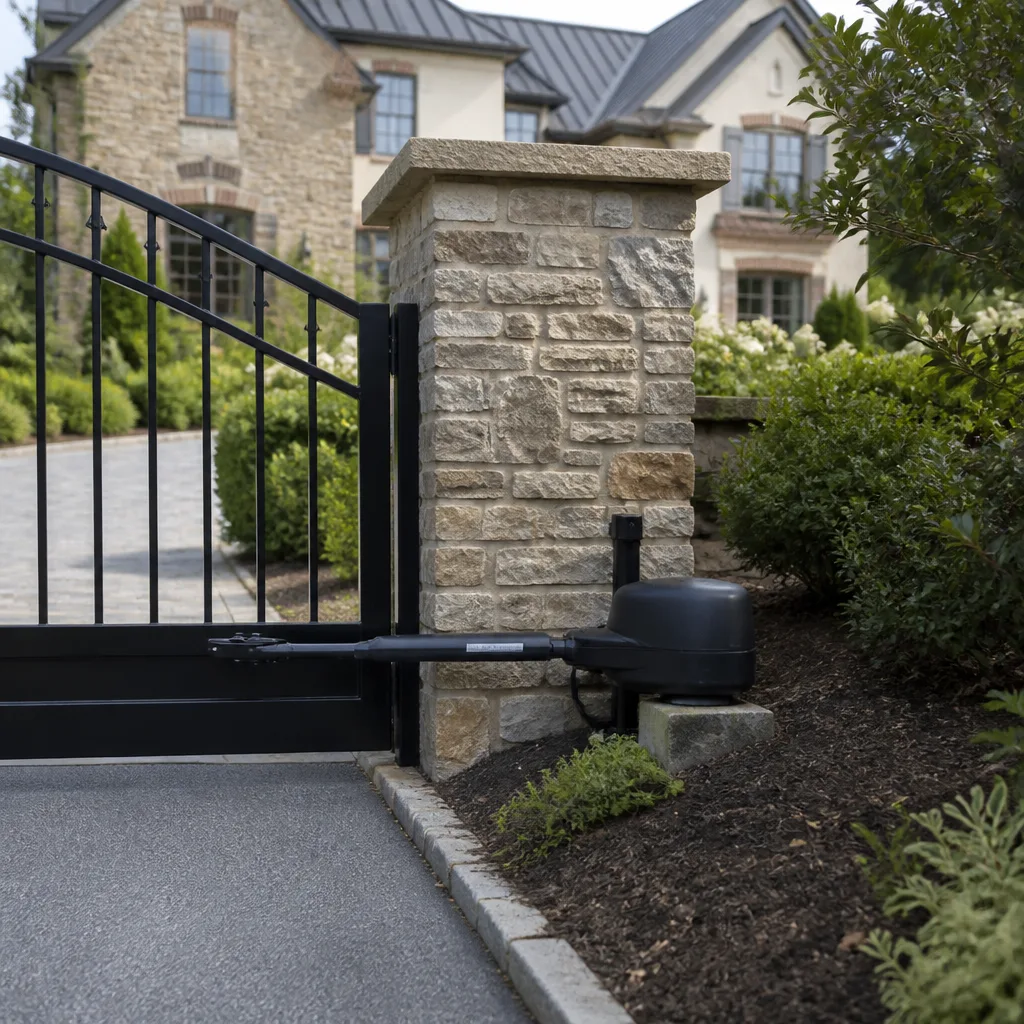
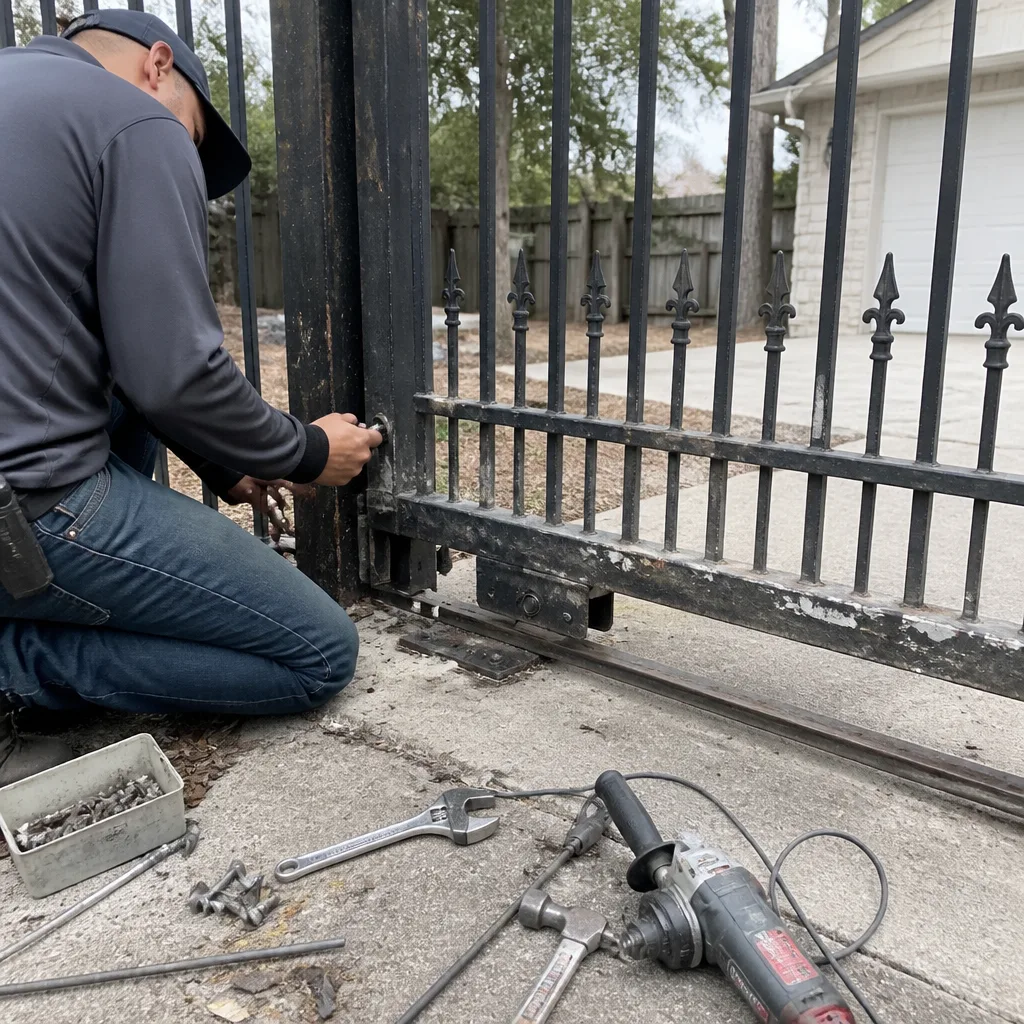 Before
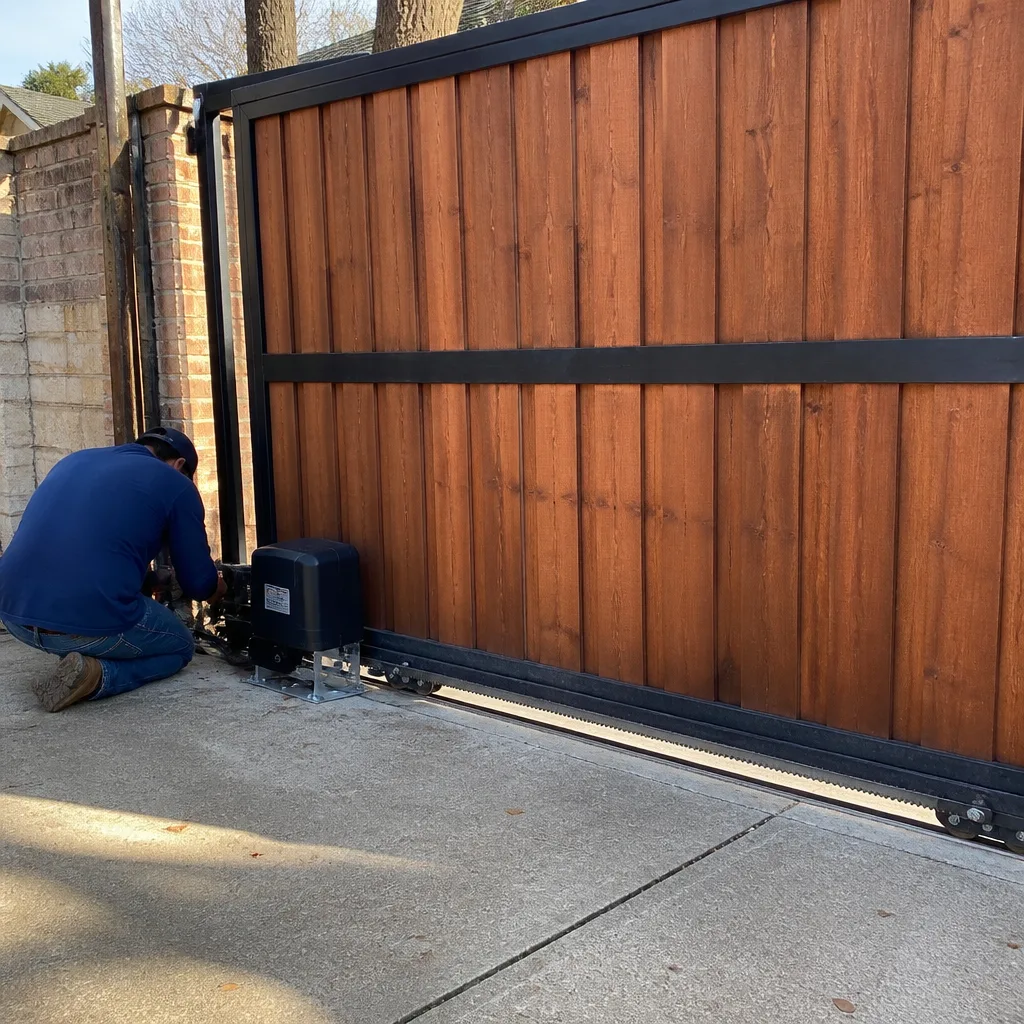 After
After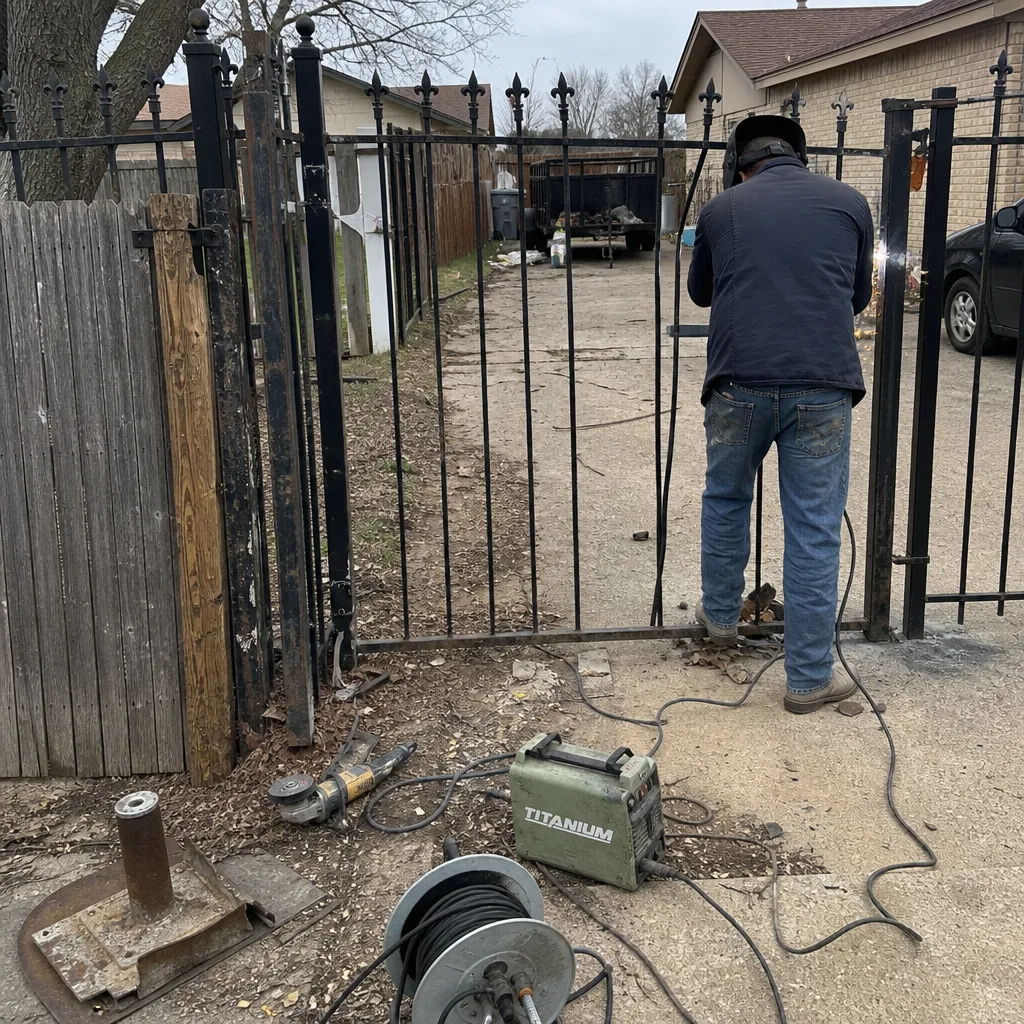 Before
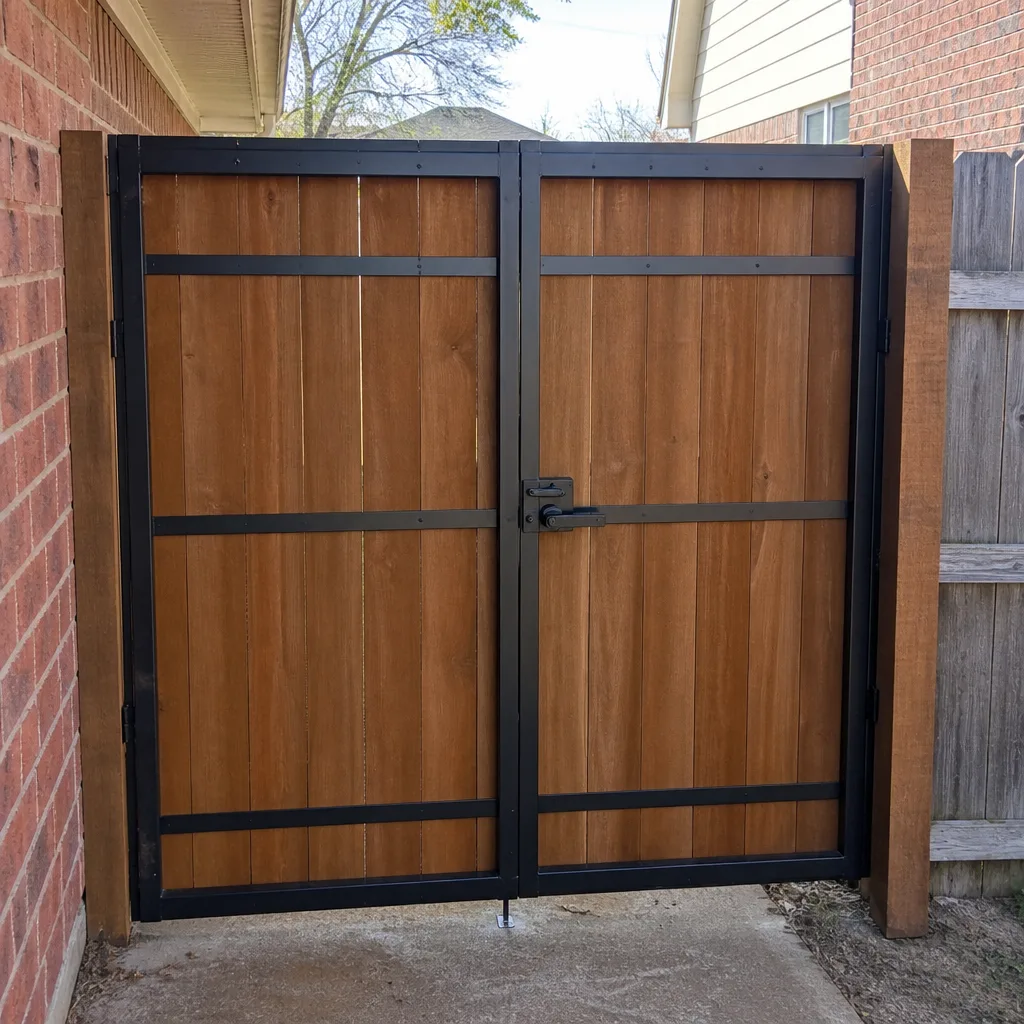 After
After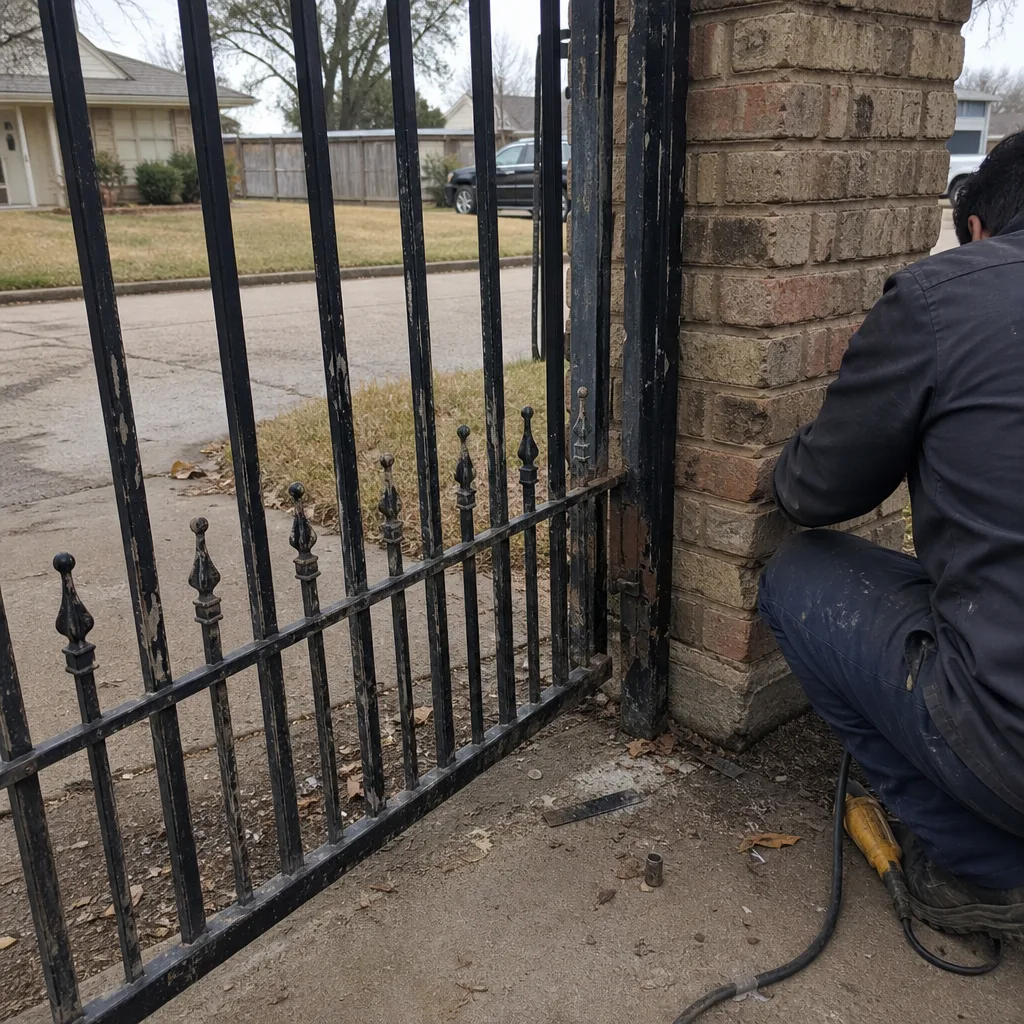 Before
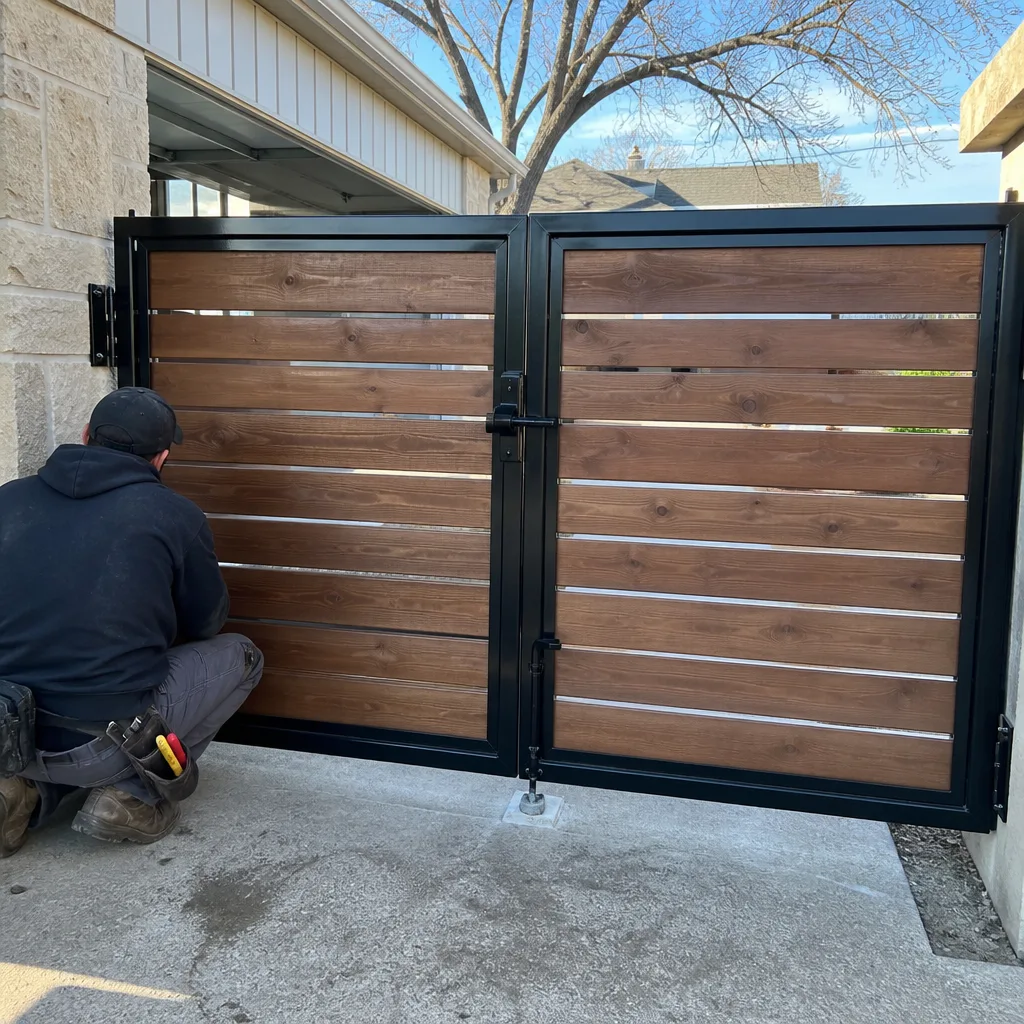 After
AfterGate Repair Warning Signs: A Duncanville Homeowner’s Reference Guide
Most Duncanville homeowners don’t think about their driveway gate until it stops moving entirely. By then, the repair is usually more expensive than it needed to be. A gate that’s been grinding, hesitating, or leaning for six months will tell you something’s wrong long before it fails outright, but those early warnings go unnoticed because gates are quiet about their problems. They don’t beep. They don’t flash lights. They just get a little slower, a little louder, a little harder to ignore. This guide covers the warning signs we’ve spent four decades learning to read, what they mean, and when a repair call in Duncanville is the difference between a $200 fix and a $2,000 one.
Quick Answer
The most common gate repair warning signs in Duncanville are a gate that moves slower than it used to, a motor that runs but doesn’t move the gate, visible sagging or leaning at the hinge post, grinding or screeching during travel, and a gate that reverses unexpectedly on its own. Any of these deserves a professional inspection, because gates are heavy enough to cause serious injury when they fail under load. Catching a hinge or motor issue early typically costs a fraction of what a full gate replacement runs.
Table of Contents
- Warning Sign One: The Hinge Post Is Leaning or Pulling Away
- Warning Sign Two: The Motor Runs But Nothing Moves
- Warning Sign Three: The Gate Slams, Stutters, or Shudders Along the Track
- Warning Sign Four: New Noises That Weren’t There Last Month
- Warning Sign Five: The Gate Reverses For No Reason
- Warning Sign Six: Rust at the Weld Points or Hinge Brackets
- Warning Sign Seven: The Keypad or Remote Works Intermittently
- Common Mistakes to Avoid
- When to Call a Professional
- Frequently Asked Questions
- The Bottom Line
Warning Sign One: The Hinge Post Is Leaning or Pulling Away
A gate that hangs off a post that’s no longer plumb is the most serious warning sign you’ll see. The post carries the entire weight of the gate leaf, and when it starts to lean, every other component works harder to compensate. In Duncanville, the clay-heavy soil expands and contracts with rain and drought cycles, and that movement gradually loosens post footings that were poured years ago. We see it most often on gates that were installed in the 1990s and early 2000s, before deep concrete collars became standard practice in this area.
What to Look For
- A visible gap between the post base and the concrete or soil around it
- A gate that drags on the ground at the latch end while the hinge end sits higher
- Cracks in the concrete collar at the base of the post
- Scrape marks on the driveway or ground where the gate used to clear comfortably
- A gate that binds at the latch but swings freely near the hinges
When a hinge post leans, the gate leaf transfers a twisting force into the hinges themselves. Steel hinges under constant twist will fatigue. The failure point isn’t always dramatic; often it’s a slow bend that eventually lets the gate drop enough to drag. At that point, the motor is fighting both the weight of the gate and the friction of the ground, and motors fail fast under that kind of load.
What Causes Post Lean in Duncanville Specifically
Our soil is the quiet culprit. The black clay under much of Duncanville holds water for days after a heavy spring rain, then shrinks to the consistency of brick during July and August. That cycle pushes and pulls on every post footing. Fence post companies deal with it constantly; gate post installers who pour a shallow footer, or skip rebar, see the same failures within a few years. We pour deeper footings than most, and we bond the post steel to the concrete with rebar, because we’ve dug up enough failed footings in this town to know what the clay does to shortcuts.
If your hinge post is leaning, don’t wait. The fix usually involves cutting and re-welding the post, re-pouring the base, and re-aligning the gate. It’s a one-day job in most cases. If the post base is still solid but the gate itself is sagging, that’s a hinge replacement job, and it’s one of the most common repairs we do for Duncanville homeowners.
Warning Sign Two: The Motor Runs But Nothing Moves
You press the remote. You hear the motor whirring or humming behind the housing. The gate doesn’t budge. That sound is the motor telling you it’s still alive but something between it and the gate has broken. In most cases on Duncanville driveways, it’s one of three things: a stripped drive gear, a sheared keyway on the output shaft, or a broken drive chain or belt.
Why This Happens
Automatic gate motors are built to move a gate leaf of a specific weight. When a gate falls out of balance, or the hinges start binding, or a wheel on the track wears flat, the motor has to push harder than it was designed to push. The first thing to give is usually the plastic or soft-metal drive gear inside the operator. It’s engineered as a sacrificial part, which is good news for the motor and bad news for the homeowner who doesn’t know why the gate stopped.
The lesson we repeat to Duncanville customers: a gate motor that is struggling to move an unbalanced gate will eventually fail, but the gate problem was there first. Fix the gate, then address the motor. Otherwise you’ll burn through another operator in a year or two. We service LiftMaster, FAAC, BFT, Linear, and five other major automation brands, so whatever is on the driveway, we diagnose the whole system, not just the part that quit.
What You Can Check Before Calling
- Look at the gate itself. Is it leaning, dragging, or visibly out of level?
- Check the track, if you have a sliding gate. Is there debris, a rock, or a root in the way?
- Try the manual release. Most operators have a keyed release that lets you push the gate by hand. If the gate is hard to move manually, the problem is mechanical, not electrical.
- If the gate moves fine by hand but not under power, the issue is in the operator itself, and that’s a service call.
The manual release test is the single most useful diagnostic a homeowner can do. It separates gate problems from motor problems, and it saves you from paying a technician to find a rock in the track.
Warning Sign Three: The Gate Slams, Stutters, or Shudders Along the Track
A gate should move like a heavy door on good hinges: smooth, steady, predictable. When it jerks or shudders, something is wrong in the mechanical path. On sliding gates, the usual suspects are worn wheels, a bent track, or a drive chain with uneven tension. On swing gates, the culprit is often a hinge that’s begun to seize, or a gate leaf that’s dragging at the latch end because the post has moved.
Stuttering is particularly hard on the motor. Every time the gate hesitates, the operator pulls a spike of current. Over time, those spikes overheat the windings and shorten the life of the control board. A gate that shudders for a month is a gate that’s slowly cooking its own electronics. The repair is nearly always cheaper when addressed early: a set of replacement wheels and a track adjustment might run a few hundred dollars. A burned-out operator and a new control board is a different conversation entirely.
A Duncanville Note on Track Gates
Sliding gates are common on older estate lots in Duncanville, particularly in the areas west of Highway 77 and along the older creek-side properties. Those tracks are exposed to everything: gravel from the driveway, grass clippings, mud after a storm, and the occasional acorn avalanche from a live oak. We tell customers with sliding gates to keep the track swept clean. It’s the cheapest maintenance there is, and it prevents more service calls than any other single habit.
If the gate is slamming at the end of travel, that’s a limit switch or a mechanical stop issue. The gate isn’t slowing down the way it should before it hits the stop. That slamming force travels back through the entire gate structure and into the posts. Over time, it loosens every bolted connection on the gate. A soft-close adjustment or a replacement limit switch fixes it, but left alone, the damage compounds.
Warning Sign Four: New Noises That Weren’t There Last Month
Gates make noise. A low electric hum from the operator, the soft rumble of wheels on track, the click of a relay when the light kicks on. Those are normal sounds. The sounds you should pay attention to are the ones that arrive suddenly: a screech, a grind, a metallic pop, or a clunk that wasn’t there before.
A Quick Noise Field Guide
- High-pitched screech during travel: Usually a dry hinge or a wheel bearing without grease. If it’s a swing gate, it’s almost always the hinge pin. Grease it or replace it.
- Grinding from the operator housing: Drive gear wear. This one doesn’t fix itself, and running it longer makes the shrapnel worse.
- Metallic pop when the gate starts moving: Often a loose bolt at the gate bracket or the track. The gate is shifting under load before it moves.
- Clunk at the end of travel: A worn or missing mechanical stop, or the gate is hitting something it didn’t hit before. In Duncanville, that something is often a tree root that has lifted a section of the track.
- Rattling when the gate is stationary: Wind rattle on a gate that’s lost tension, or a loose cover on the operator.
Noise is diagnostic. It’s the gate telling you where it hurts. Homeowners who call at the first screech are usually looking at a hinge service or a bearing replacement and a couple hundred dollars. Homeowners who wait until the noise stops because something sheared off are usually looking at a weld repair and a new part they didn’t plan to buy. Listen to your gate. It’s more honest than most contractors.
Warning Sign Five: The Gate Reverses For No Reason
A gate that stops and reverses halfway through its travel is a gate that thinks something is in the way. That’s a safety feature, and it’s a good one, but when it triggers with nothing in the path, the safety system itself has a problem. The usual suspects: a misaligned photo eye, a failing safety edge on the leading edge of the gate, or a control board that’s receiving false obstruction signals.
On swing gates, a false reversal often points to an obstruction detection circuit that’s reading the motor’s current draw. If the hinges are binding, the motor pulls more current than the board expects, and the board interprets that as an obstruction. So the gate reverses. Homeowners assume it’s an electrical problem when it’s actually a mechanical one. The board is doing its job; the gate is harder to push than it should be.
On sliding gates, the photo eye alignment matters. Duncanville’s afternoon sun, particularly on west-facing driveways, can blind a photo eye and cause intermittent false readings. The fix might be as simple as cleaning the lens and adjusting the angle. But it might also be a worn safety edge that’s shorting internally. The only way to know is to test the circuit, and that’s a job for someone with the right diagnostic equipment.
We never bypass safety features. Not ours, not any other company’s. A gate that reverses when it shouldn’t is frustrating, but a gate that doesn’t reverse when it should is dangerous. The fix is to repair the safety system, not disable it.
Warning Sign Six: Rust at the Weld Points or Hinge Brackets
Steel gates in Duncanville live outside in a climate that swings from humid to bone dry, and the welds are where the weather attacks first. Weld points are microscopically porous. Moisture settles into those pores, sits there, and starts oxidizing. A little surface rust is normal and mostly cosmetic. Rust that’s flaking, bubbling, or leaving orange streaks down the gate face is structural, and it’s asking for attention.
The hinge brackets carry static and dynamic load, and rust there is a load-bearing problem. A bracket that’s lost 30 percent of its cross-section to rust will still look fine from the driveway, but it’s holding the gate with a fraction of its original strength. We’ve replaced hinge brackets on Duncanville gates that looked cosmetic from five feet away and were nearly rusted through at the weld line.
What Homeowners Can Do
- Inspect the hinge brackets and weld points once a year with a flashlight. Look for flaking rust, not just discoloration.
- Wire-brush light surface rust and treat it with a rust converter or a quality primer.
- Keep the bottom rail of the gate clear of grass and soil. Contact with wet earth accelerates rust faster than rain does.
- If a weld is cracking or a bracket is flaking, call a gate company that can cut out the bad section and weld in new steel.
Rust repair is welding work. It’s not a handyman-with-a-grinder job. A proper repair removes the compromised steel, welds in new material, and repaints the section to match. Done right, it’s invisible and it lasts. Done poorly, the rust comes back under the paint and the bracket fails a year later. We do this work in-house, and we stand behind it with the 90-Day Done Right Promise: if it’s not right, we come back and make it right, in writing, no arguing.
Warning Sign Seven: The Keypad or Remote Works Intermittently
When a keypad only works sometimes, the easy answer is to blame the keypad. Replace it, pair it, move on. But intermittent access problems are often the canary in the coal mine for the control board, and a new keypad won’t fix a board that’s starting to fail. We’ve seen Duncanville homeowners replace remotes and keypads three times before the board gave out completely, and each replacement didn’t solve the problem because the problem was never the keypad.
How to Narrow It Down
- Does the gate open with the wall button or the manual release? If yes, the motor and gate are fine, and the issue is in the wireless path or the board’s receiver.
- Does the problem happen at the same time of day? Afternoon heat on a west-facing control box can cause thermal shutdowns. Morning cold does the same thing to older boards.
- Does a second remote have the same problem? If yes, it’s probably the receiver or the board. If no, it’s the remote.
- Does the keypad work from the house but not from the car? Range issues can point to antenna damage or a failing receiver.
Access control is the part of the system most Duncanville homeowners use the most and understand the least. The board, the receiver, the keypad, the remote, the intercom if there is one, the loop detector in the driveway. When any of those components starts to go, the symptoms look like a battery problem. They’re rarely a battery problem. A gate company that services nine major opener brands has the diagnostic path to find the actual fault on the first visit, which saves you from buying parts you don’t need.
If you’ve replaced the keypad and the problem persists, stop replacing parts. The Ironworks Gate Co. home team can trace the fault in one visit.
Common Mistakes to Avoid
- Greasing the track to make the gate slide easier. Grease on an outdoor track in Duncanville collects dust, pollen, and grit, and turns into grinding paste. Tracks should be clean and dry, with lubrication only on wheel bearings, never on the track surface.
- Ignoring a sagging gate because it still opens. A gate that’s dragging slightly is a gate putting constant strain on the motor. Every week of dragging takes something off the life of the operator. Fix the sag when it’s a hinge issue, not after it’s a motor issue.
- Running the gate manually after the motor fails instead of calling for repair. Automatic gates are heavier to move than they look, and a gate that binds mid-swing can pinch or crush. If the motor fails, secure the gate open and call for service.
- Painting over rust without treating it. Paint doesn’t stop oxidation; it hides it. The rust keeps working under the surface, and by the time it shows through again, the steel is thinner than it was before.
- Hiring a general handyman to adjust gate automation. Gate operators involve high-voltage wiring, low-voltage control circuits, and heavy moving steel. That’s three separate skill sets. We’ve fixed enough handyman work in Duncanville to know that the second repair usually costs more than the first one would have.
- Waiting for a fence company’s “gate guy” because the gate came from the fence company. Fence companies build fences. Gate automation is a different trade. When the gate fails, call a gate company, not the fence installer who subcontracted the gate out in 2007.
- Turning off the safety reversal because it’s “annoying.” The safety features on a gate exist because gates kill people. A gate that reverses falsely is a repair job. A gate that never reverses is a lawsuit. Never disable an obstruction sensor.
When to Call a Professional
Call when the gate is leaning, when the motor runs but doesn’t move the gate, when the gate shudders or slams, when new noises appear, when the gate reverses falsely, when rust is flaking at the welds, or when the keypad stops working consistently. On any of these, the sooner you call, the smaller the repair. On the hinge post specifically: a leaning post that’s caught early is a post re-set. A post left leaning for a year is a gate that’s fallen off and damaged a car or crushed a trash can. Duncanville gates fail in the same order every time: post first, hinges second, motor third. Catch it at step one and you’ve saved yourself steps two and three.
Ironworks Gate Co. offers free estimates in Duncanville. Call (903) 532-2236 and a live person answers, day or night. We’ll set an appointment, diagnose the gate, and quote a price before any work begins. No surprises on the bill, ever.
Frequently Asked Questions
A grinding noise almost always comes from the operator’s drive gear wearing against the gear rack or chain. The gear is a sacrificial part, and once it starts to strip, the grinding gets worse every cycle. Replacing the gear is a standard repair, but running the gate too long can send metal shavings into the motor housing and damage the windings. Call for service when the grinding starts.
Most gate repairs in Duncanville run between $150 and $600 depending on whether it’s a hinge adjustment, a limit switch replacement, a track realignment, or a drive gear replacement. Operator replacement is a bigger job and typically starts around $900 and up depending on the opener brand and the gate size. Every Ironworks Gate Co. job is quoted and agreed before work starts, so the invoice matches the quote. Call (903) 532-2236 for a free estimate.
In most cases, yes. Most gate repairs are completed in a single visit, and we keep common parts in the truck: hinges, wheels, photo eyes, limit switches, keypads, and drive gears for all nine brands we service, including LiftMaster, FAAC, BFT, and Linear. A live person answers 24 hours a day at (903) 532-2236, and we’ll schedule a visit that fits your day.
We service LiftMaster, FAAC, BFT, Linear, Viking, Ghost Controls, DoorKing, Elite, and Mighty Mule. That covers the vast majority of openers on Duncanville driveways. If your opener is one of those brands, we diagnose and repair it in the first visit. If it’s a brand we don’t service, we’ll tell you straight, and we’ll point you to someone who can help.
Yes. A leaning post is under constant stress, and the hinge bolts are carrying a load they weren’t designed to carry. When the post fails, the gate drops without warning. A gate leaf can weigh 300 to 800 pounds. If it falls on a person, a pet, or a vehicle, the damage is serious. We treat a leaning post as a priority repair, and we’ll do everything we can to get it fixed the same week you call.
A well-built steel gate on properly poured footings lasts 20 to 30 years in Duncanville’s climate, with regular hinge maintenance and occasional paint touch-ups. The automation typically lasts 7 to 12 years before the operator needs replacement. Gates that were installed without deep footings, or built from thin-gauge steel, fail much sooner, usually starting with the post lean and hinge sag described above. We re-set posts and replace hinges on gates of every age, and we’ve brought 40-year-old gates back to operating like the day they were hung.
The Bottom Line
Your gate warns you before it fails. Leaning posts, motor hums, shudders, new noises, false reversals, flaking rust, and flaky keypads are not random annoyances. They’re the early symptoms of failures that get more expensive the longer they’re ignored. In Duncanville’s clay soil and hot summers, the pattern is predictable: post first, hinges second, motor third. Catch it at the post and you’ve saved yourself two bigger repairs. Call early, get a straight quote, and know the price before the work starts. That’s how we operate, and that’s what the 90-Day Done Right Promise means in plain terms: if it’s not right, we come back and fix it. Every time, no arguing. Call (903) 532-2236 for a free estimate. We answer the phone.
Written by Victor Salinas, Owner at Ironworks Gate Co., serving Duncanville since 2013.