
Last updated August 25, 2026
Free on-site gate assessment - hinges, posts, and your LiftMaster or Nice gate operator checked before anything is quoted
The assessment is free and the quote is the invoice.
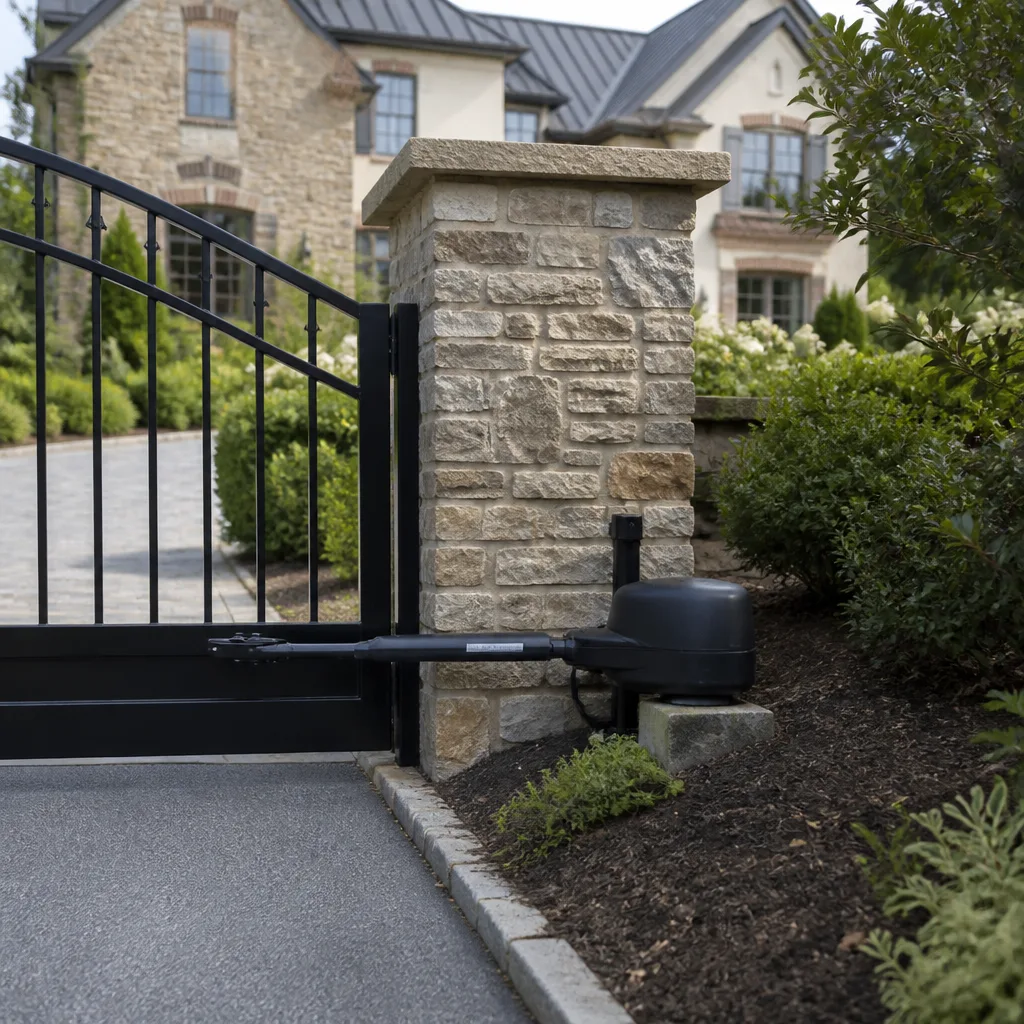
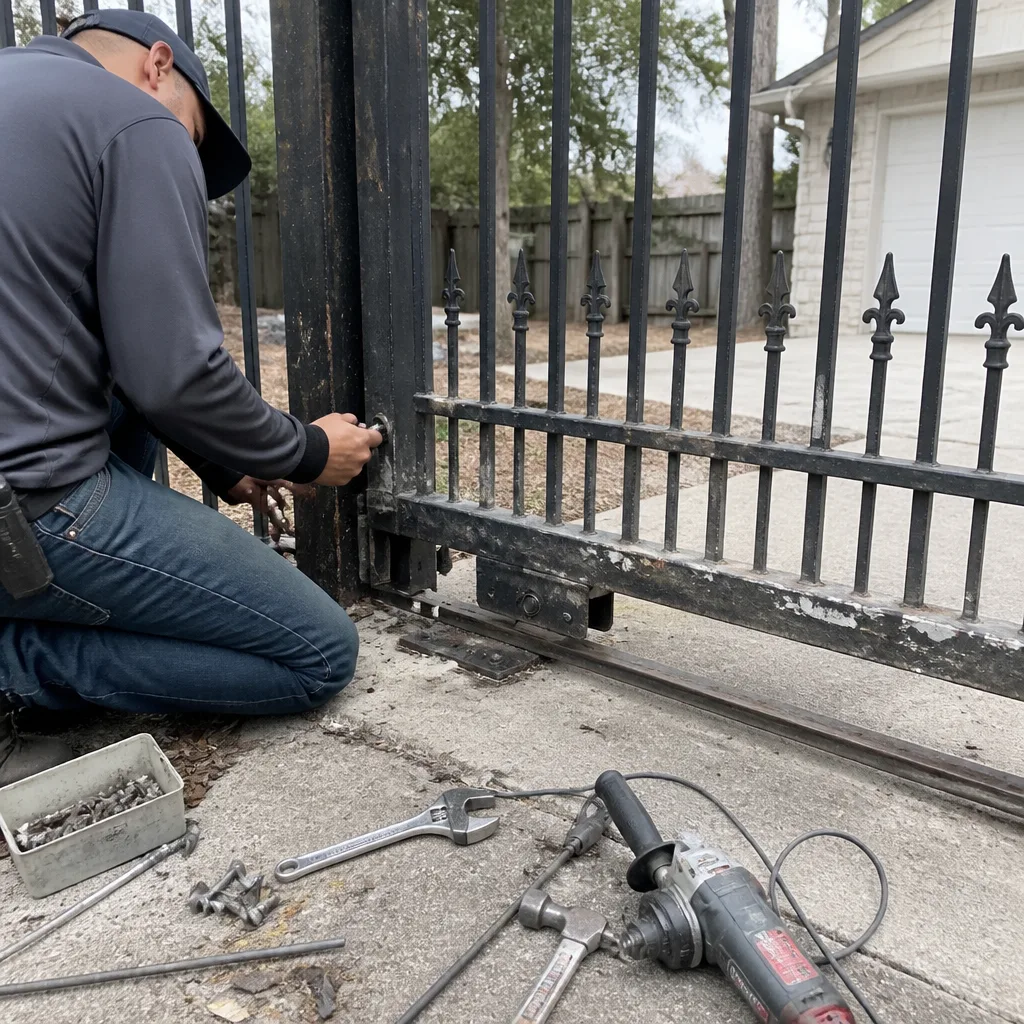 Before
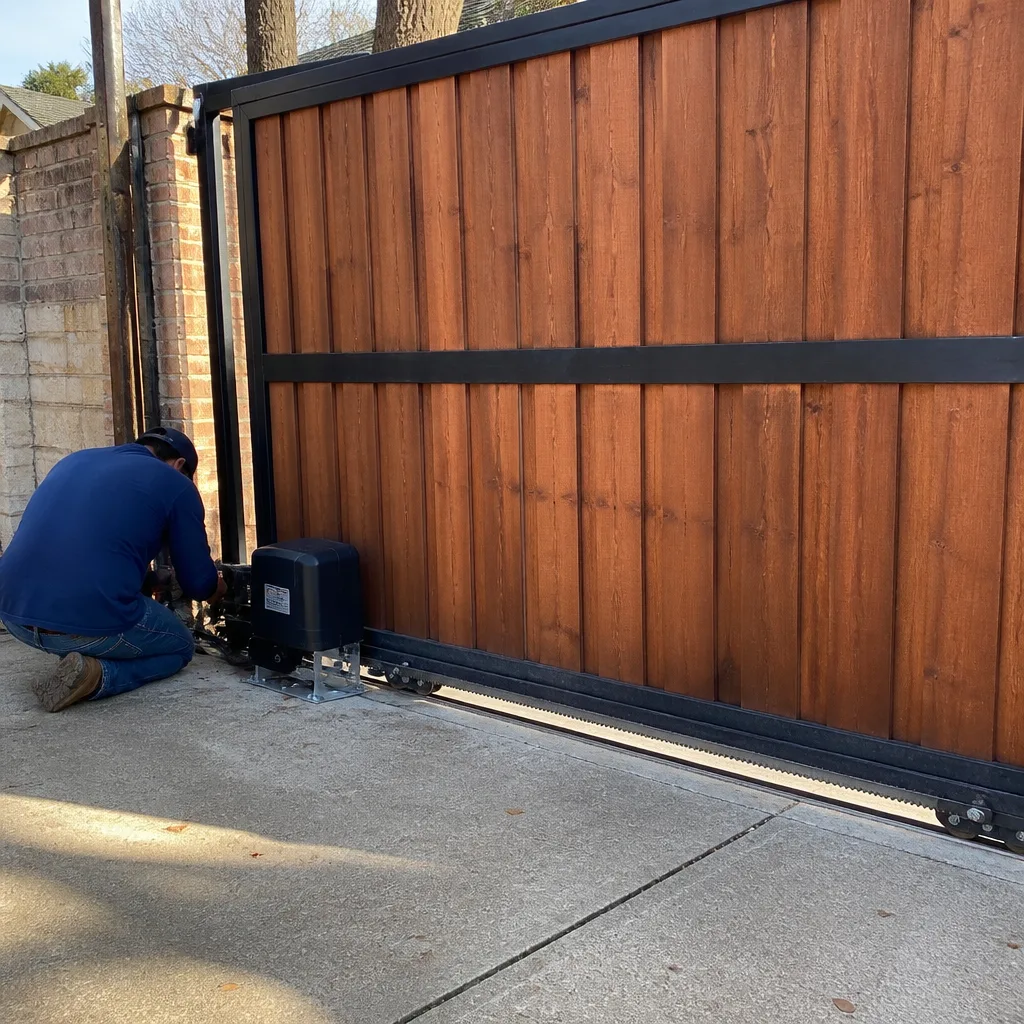 After
After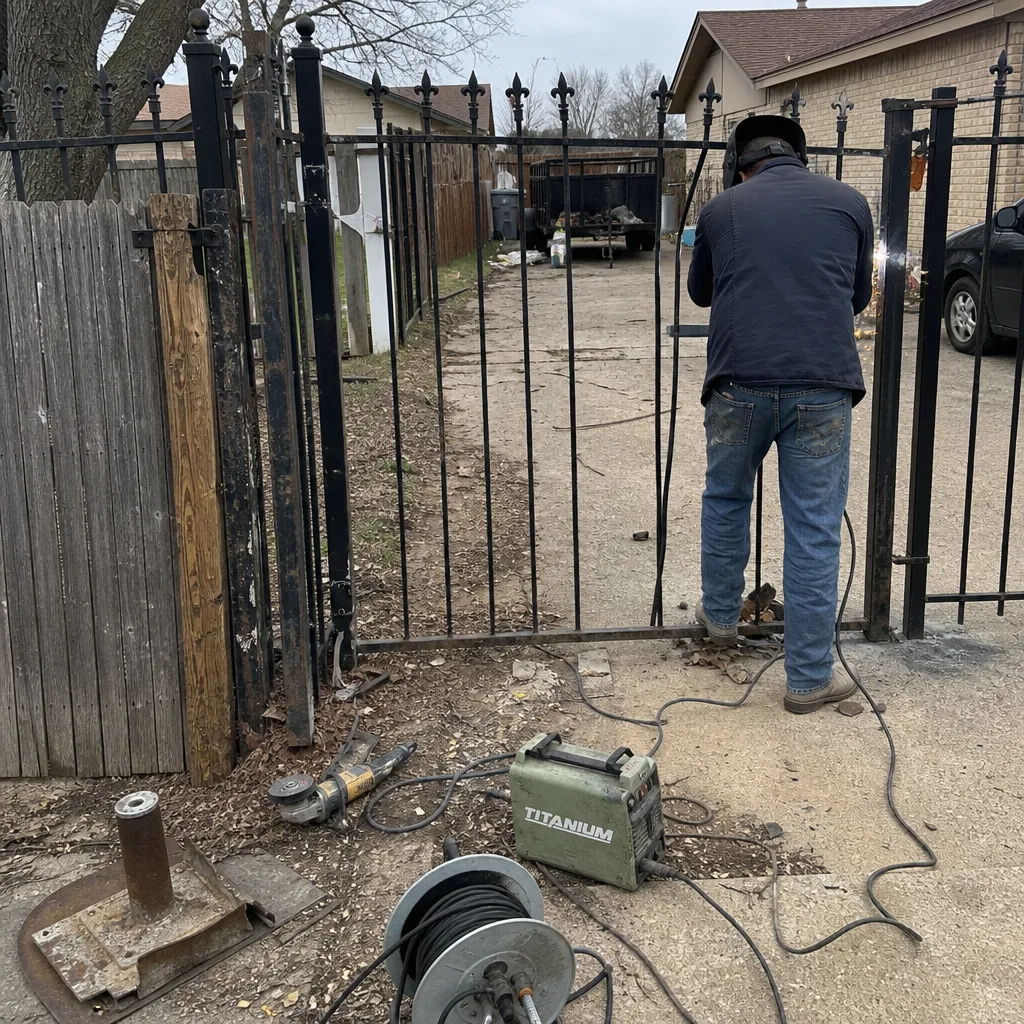 Before
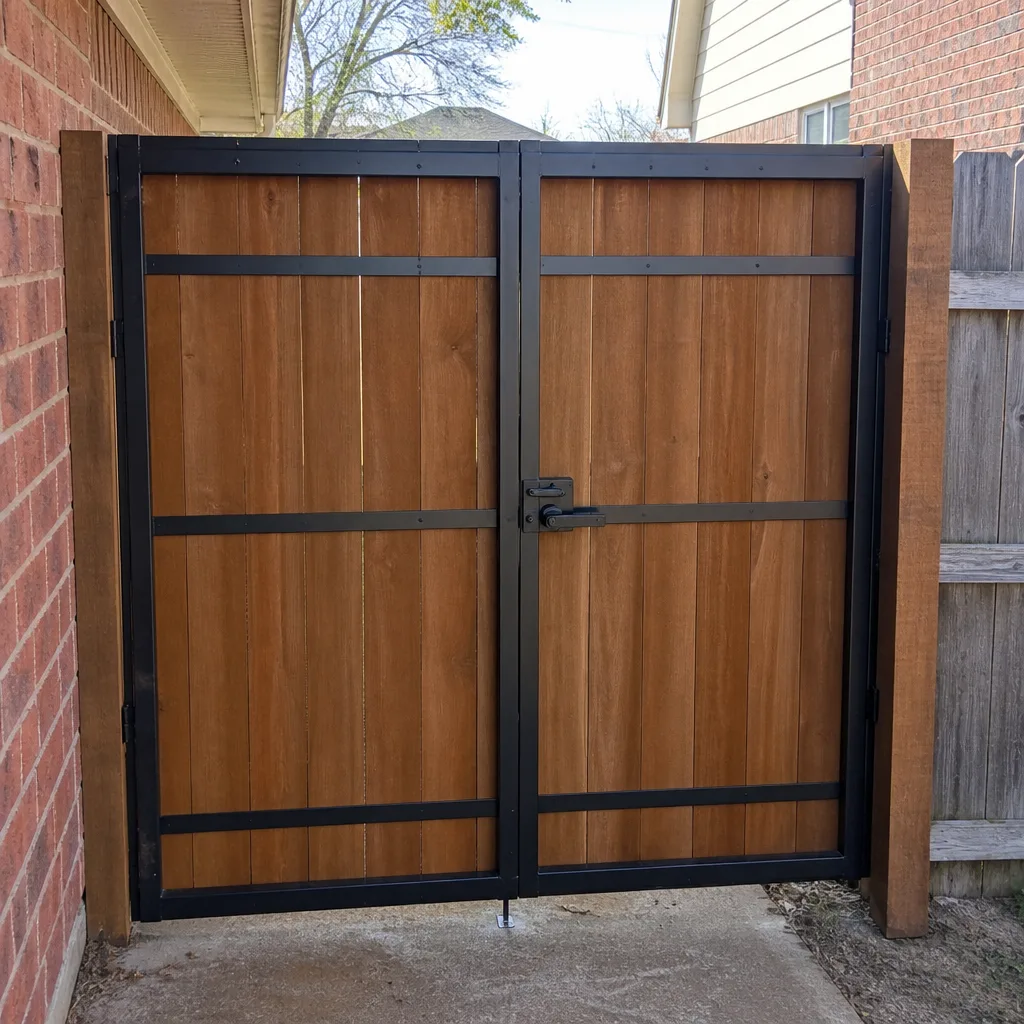 After
After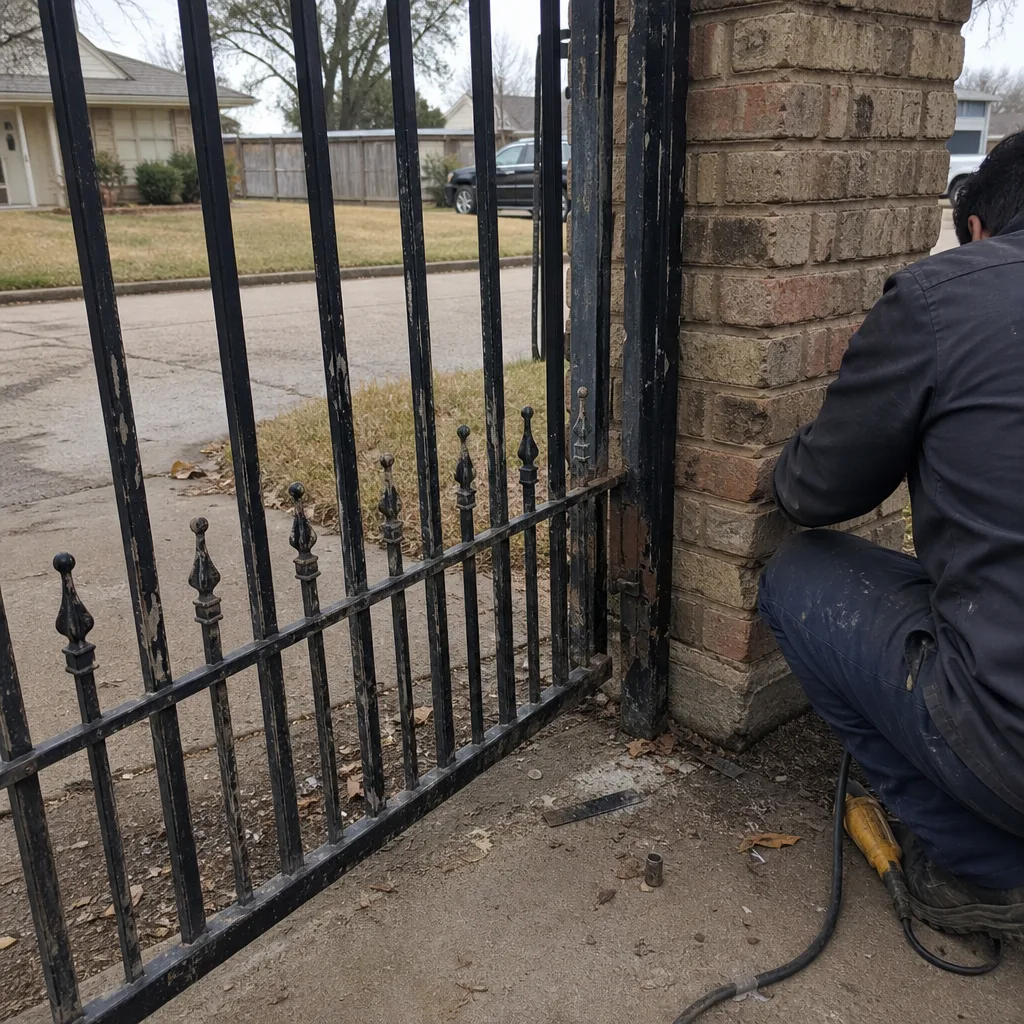 Before
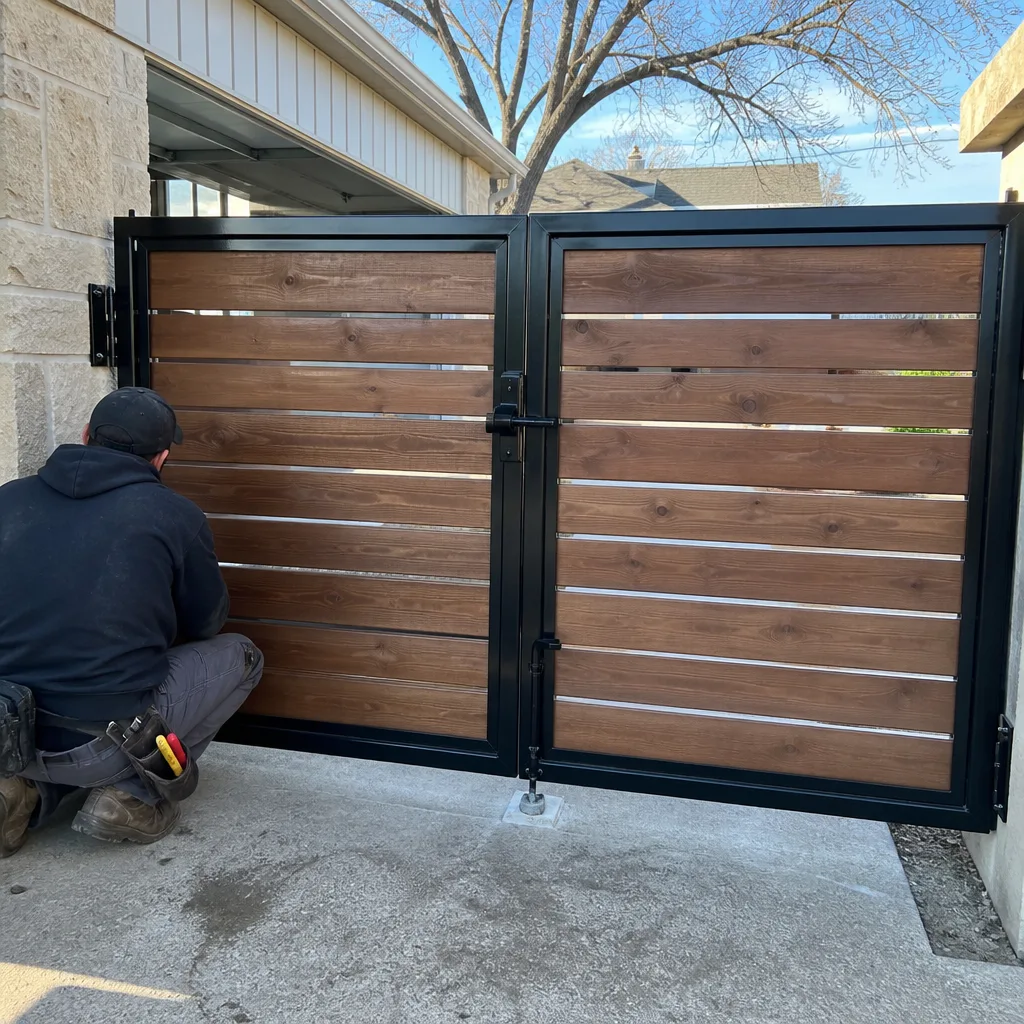 After
AfterThe Complete Guide to Gate Repair in Duncanville
Most driveway gates in Duncanville fail for reasons that have nothing to do with the gate itself. In over two decades of repairing gates across this city, we’ve found that the real culprits are usually the same three things: a settling concrete post from our expansive clay soil, a control board that took one too many North Texas lightning-adjacent power surges, or a cheap hinge that was undersized from the day it was hung. This guide walks you through how gates actually fail in Duncanville, what repairs cost here, what you can check safely on your own, and when a repair is worth doing versus when replacement is the honest answer. By the end, you’ll know exactly what questions to ask any gate company that shows up at your door.
Quick Answer
Gate repair in Duncanville typically costs $145 to $190 for a service call and basic fix, $250 to $650 for opener or control board work, and $800 to $2,500 for structural repairs like sagging frames, broken welds, or post replacement. Most common failures, like a misaligned photo eye or a stripped gear, are fixed in one visit by a technician who carries parts for LiftMaster, FAAC, and BFT systems on the truck.
Table of Contents
- How Gates Actually Fail in Duncanville
- The Types of Gates We See in Duncanville
- What Gate Repair Costs in Duncanville
- What You Can Check Yourself (Safely)
- Gate Opener and Automation Repair
- Structural Repair: Hinges, Welds, and Sagging Gates
- Repair vs. Replacement: The Honest Math
- How to Choose a Gate Repair Company in Duncanville
How Gates Actually Fail in Duncanville
A gate is a simple machine: a heavy steel frame swinging or sliding on hinges, driven by a motor that has exactly one job. When it works, nobody thinks about it. When it fails, it fails for predictable reasons. Duncanville sits on what geologists call the Eagle Ford formation, a clay-heavy soil that swells when it rains and shrinks when it dries. That movement is the single biggest reason we see gate posts lean out of plumb, which then drags the gate leaf down, which then overloads the opener motor, which then burns out the capacitor or strips the drive gear. One problem becomes four problems, and the homeowner only sees the last one: the gate stopped opening.
The second most common failure in Duncanville is electrical. Our summer storms bring power surges that travel through the low-voltage wiring from the house to the gate operator. A control board that costs $300 to $600 can be fried in a second by a surge that a $40 surge protector would have stopped. We see this pattern constantly, and it’s almost never caught until the gate is dead.
The third is simply age and material fatigue. Duncanville has a lot of homes built in the 1970s through the 1990s, and many of those gates are original to the property. Steel rusts, powder coating chips, hinge pins wear into an oval shape, and weld joints crack from years of wind load and thermal expansion. A gate that’s 30 years old doesn’t fail because it was built wrong. It fails because it’s 30 years old.
Here’s the list of what actually breaks, in order of how often we see it in Duncanville:
- Opener gears and sprockets: Plastic gears in older LiftMaster and Mighty Mule units strip after 8-12 years of use.
- Control boards: Power surges and moisture intrusion kill boards faster than any other component.
- Photo eyes: Misalignment, spider webs, dirt, and sun exposure cause false obstruction signals.
- Hinge failure: Worn pins and elongated holes cause sagging and binding, which stresses everything else.
- Post lean: Clay soil movement shifts posts, changing gate geometry and causing misalignment.
- Weld cracking: Fatigue cracks at stress points, especially on ornamental iron gates with thin pickets.
- Keypad and receiver failure: Weather exposure and aging components stop working without warning.
- Battery backup death: Sealed lead-acid batteries last 3-5 years and die silently.
The Types of Gates We See in Duncanville
Duncanville’s housing stock spans several decades, which means we work on a real variety of gate types. Knowing what kind of gate you have matters because the failure patterns and repair costs are different for each.
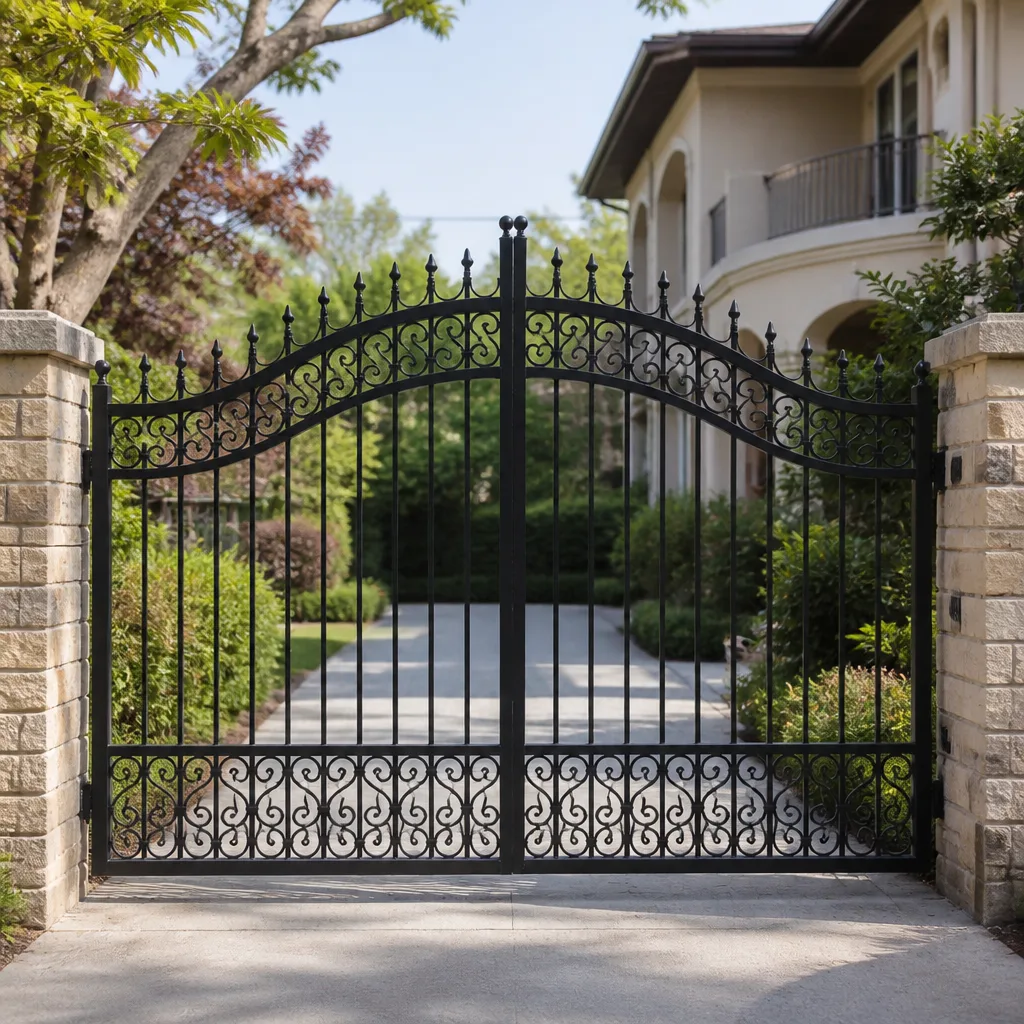
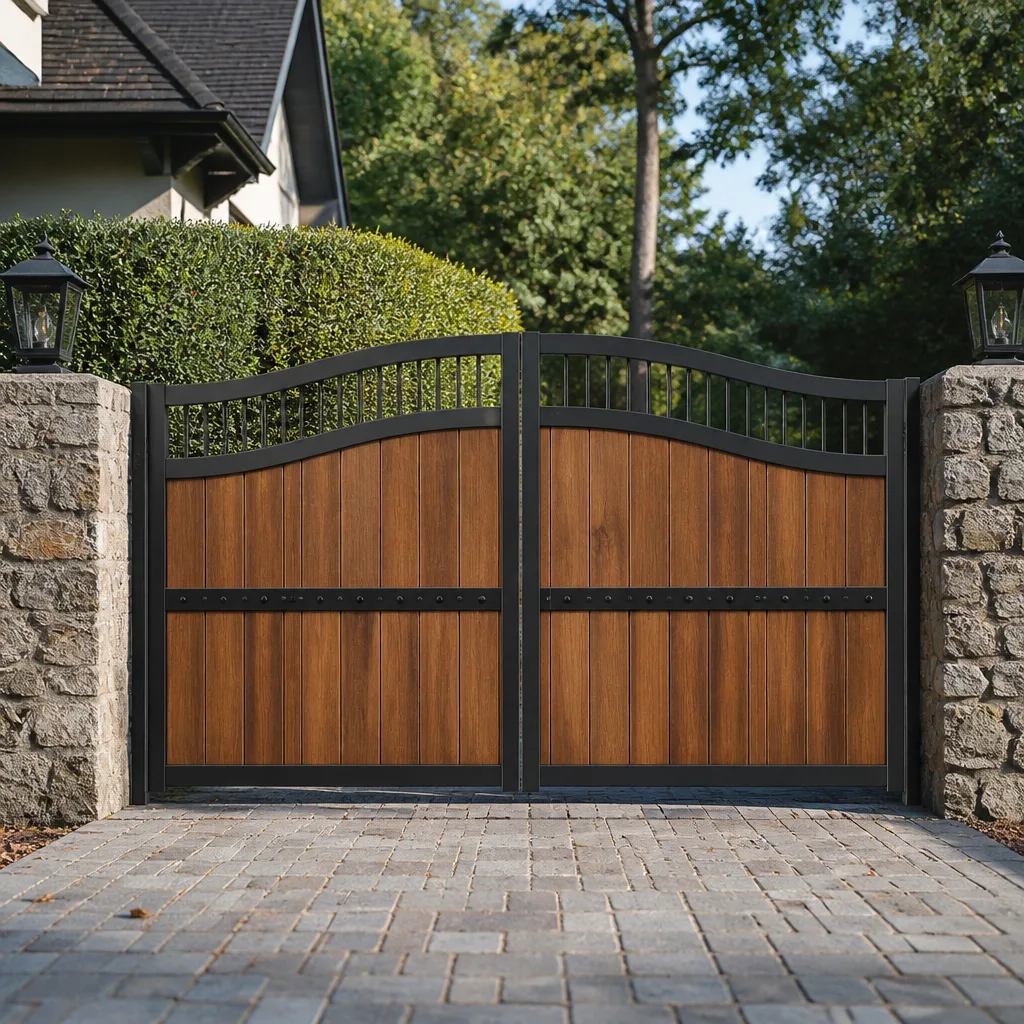
Swing gates are the most common in the older neighborhoods running from Main Street east toward Ten Mile Creek. These are typically ornamental iron gates, sometimes with wood infill, hung on post hinges and driven by an articulated arm opener or a below-ground piston. Swing gates suffer most from post lean and hinge wear because the entire weight of the leaf is levered against the hinge post every time the gate moves. A swing gate that’s dragging on the concrete is almost always a hinge or post problem, not an opener problem.
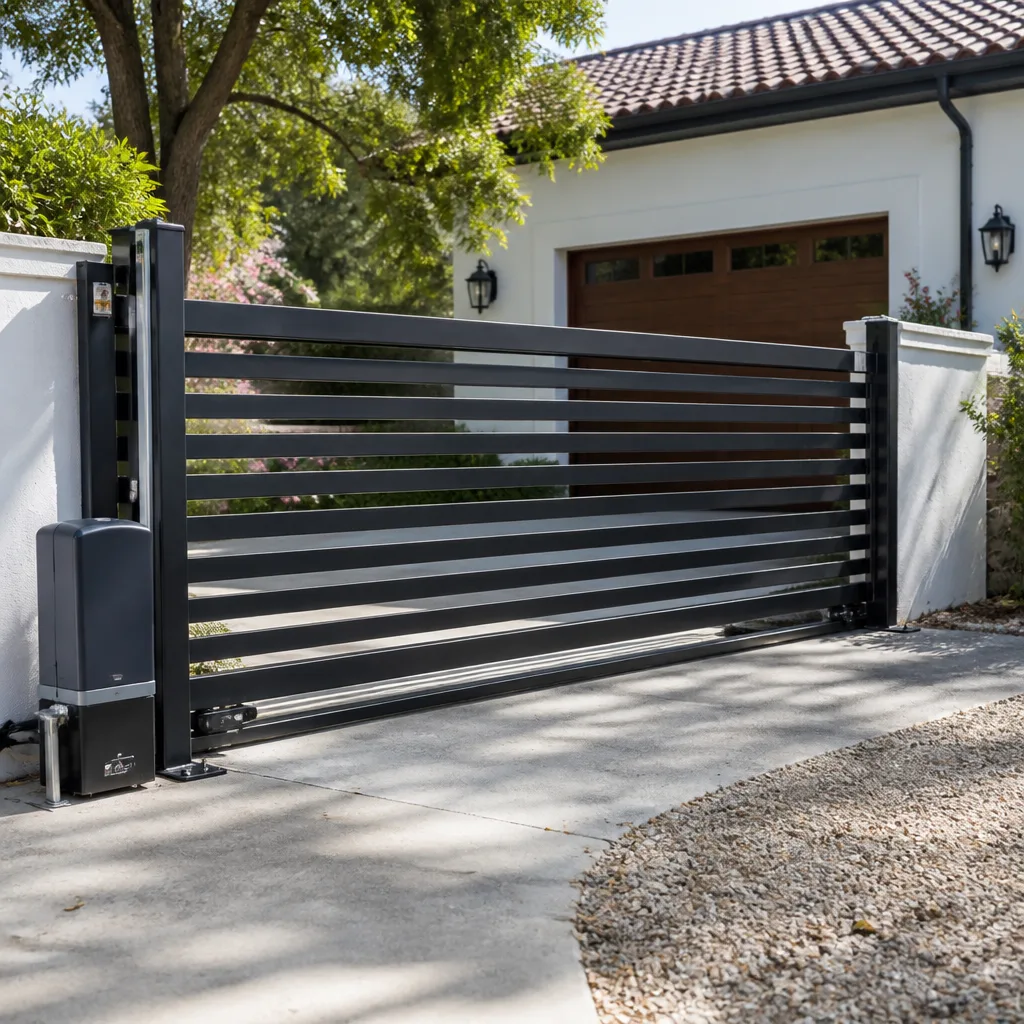
Sliding gates dominate the larger properties and newer developments on the west side of town. These gates roll on a track or cantilever off rollers, driven by a gear-and-rack system. Sliding gates fail in different ways: rollers seize, the rack gets out of alignment, or the chain stretches until it jumps the sprocket. Sliding gates also collect debris in the track, which is a constant issue with Duncanville’s oak trees dropping leaves and branches.
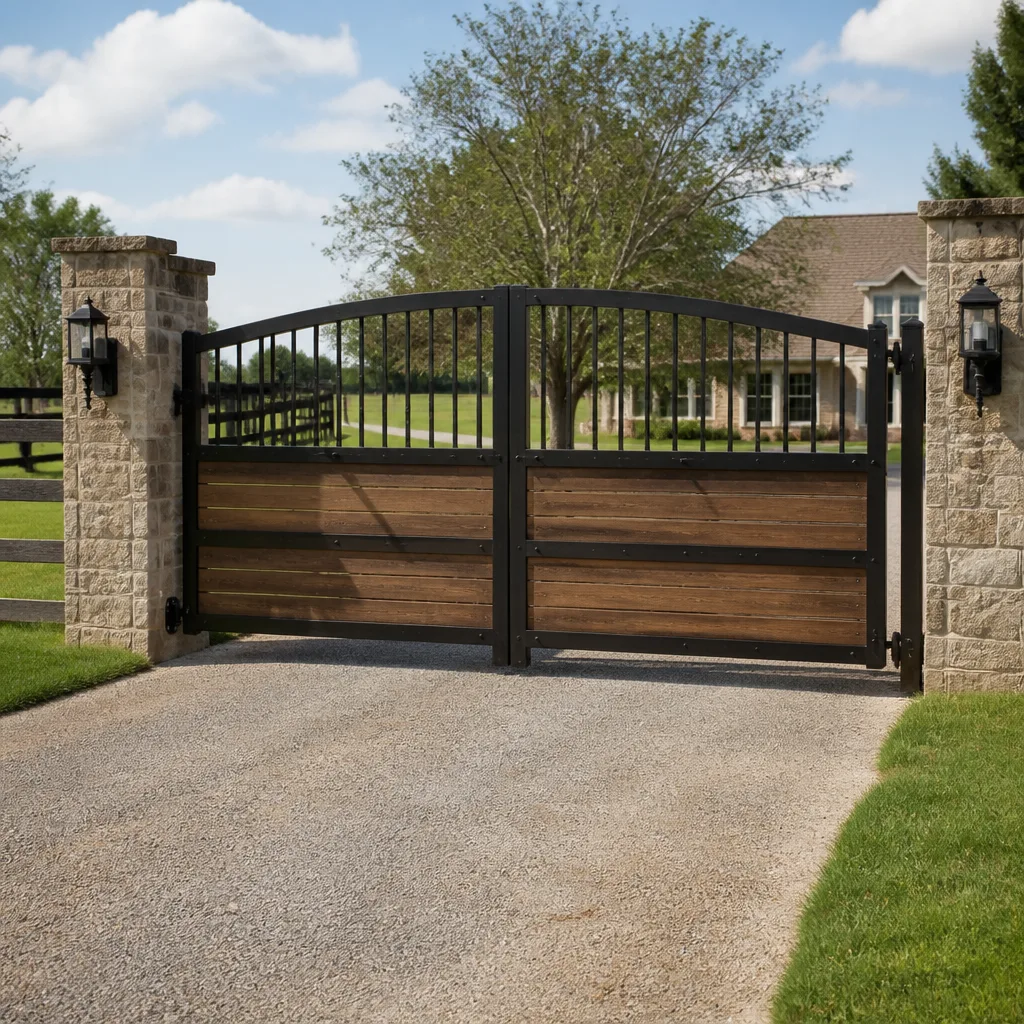
Estate gates, particularly in the acreage properties along FM 1382 and the rural-adjacent edges of Duncanville, are often custom-built, heavy, and automated with commercial-grade equipment. These gates might use FAAC hydraulic operators or Viking linear actuators. Repairs on estate gates require a technician who understands both the mechanical and electronic systems, because the stakes are higher: a failed estate gate often means a failed security perimeter.
Pedestrian gates built into driveway gate systems have their own common failures: magnetic locks that stop releasing, self-closing hinges that lose tension, and keypads that stop coding correctly. These are usually quick fixes but frustrating when ignored.
What Gate Repair Costs in Duncanville
This is the section everyone scrolls to. We’re going to give you real numbers based on what we charge and what we see from competitors in the Duncanville market. Prices are accurate as of early 2026 for our service area.
The basic structure of a gate repair bill is this: a service call fee that covers the trip and diagnosis, plus parts and labor for the fix. At Ironworks Gate Co., the service call is applied toward the repair, so you’re not paying a separate diagnosis fee if you approve the work.
Here’s a realistic pricing table for common repairs in Duncanville:
- Misaligned photo eye or limit switch adjustment: $145-$190 total, usually fixed within the hour
- Keypad replacement or reprogramming: $175-$325, depending on brand and whether wiring is intact
- Gear replacement on a swing or slide opener: $250-$475, parts and labor included
- Control board replacement: $325-$650, depending on whether it’s a LiftMaster, FAAC, BFT, or Linear board
- Battery backup replacement: $150-$250 per battery, most systems need two
- Hinge replacement, single hinge: $145-$275, heavier gates cost more
- Post straightening or reinforcement: $400-$900, depends on how far the post has moved
- Weld repair on ornamental gate: $150-$350 per section, depending on access and severity
- Full opener replacement: $800-$1,800 installed, brand and gate weight drive the price
- Cantilever roller replacement: $225-$475 per roller set
Before any work starts, you get an exact price in writing. Not a range, not an estimate that might grow. The number we quote is the number on the invoice. If we find something unexpected mid-repair, we stop, call you, and get approval before spending another dollar. That’s how we’ve done it for over 42 years, and it’s how Victor Salinas has run this company since he began serving Duncanville.
One more thing about cost: the $89 Seasonal Tune-Up is the cheapest gate insurance that exists. A technician goes through the entire system, tightens hardware, checks limits, greases what needs greasing, and flags anything that’s going to fail soon. Catching a worn gear during a tune-up is $250. Ignoring it until the gate stops working on a Sunday night can turn that into a $500 emergency call. Duncanville homeowners who get a tune-up every spring and fall almost never see a major failure.
What You Can Check Yourself (Safely)
We respect a homeowner who wants to understand their own gate. Some things you can absolutely check safely without special tools. Other things you should not touch, and we’ll be clear about which is which.
Safe to check:
- Photo eye alignment: Look at the small sensors on either side of the gate opening. They should face each other squarely. If one is loose, pushed, or covered in dirt or spider webs, clean it and tighten it gently. If the small indicator light is blinking or off, that’s usually a fixable alignment issue.
- Track debris: On a sliding gate, clear leaves, gravel, and acorns from the track. Duncanville’s live oaks drop enough debris to jam a track in one season.
- Visible hinge wear: Look at the hinge pins. If you see metal dust, an oval-shaped pin hole, or the gate leaf sitting visibly lower than the other leaf, that’s a worn hinge. You can note it, but don’t try to adjust it.
- Keypad battery: Many keypads use a 9-volt battery that dies and makes the keypad seem broken. Pop the cover and swap the battery. That fixes about 20% of “broken keypad” calls we get.
- Remote battery: If the gate works from the wall button but not the remote, try a fresh battery before calling anyone. This seems obvious, but it’s the single most common non-repair “repair” we see.
Do not touch:
A gate opener contains components under high tension and electrical systems that can deliver a serious shock. The torsion springs on some swing gates, the chain tension on slide gates, and the capacitor inside the opener all hold stored energy. If a gate comes off its track, or the opener makes a grinding noise and stops, don’t try to force it. Cut power at the breaker if there’s an obvious electrical issue, then call a professional. This isn’t gatekeeping (no pun intended). It’s the honest truth that a trained technician with the right tools can do in 45 minutes what could hurt a homeowner who tries it with a socket set and a YouTube video. We have seen the injuries that result from spring tension being released incorrectly, and it’s always a preventable thing.
Gate Opener and Automation Repair
The modern driveway gate is an automation system, not just a metal barrier. The opener is the part homeowners think about least and depend on most. When it fails, the gate is just a very heavy, very inconvenient wall.
Here’s how to think about opener failures, in order of probability:
- Power problem: Breaker tripped, GFCI tripped, surge protector died, or a loose wire at the junction box. Check the breaker first.
- Safety device problem: Photo eye misaligned, loop detector failed, or edge sensor triggered. The opener thinks something is in the way and refuses to run.
- Control board problem: Burnt relay, fried capacitor, or moisture on the board. Lightning and power surges are the usual cause.
- Mechanical wear: Stripped gears, stretched chain, worn sprockets. This is age, plain and simple.
When we diagnose an opener, we work through that list in that order. It saves time and money. Some companies start replacing parts hoping to hit the fix. We don’t work that way, and you shouldn’t accept that from anyone.
A trained technician on our team is factory-familiar with LiftMaster, FAAC, BFT, and Linear systems, among others. That matters because each brand has different diagnostic protocols and different common failure points. A FAAC hydraulic operator behaves nothing like a LiftMaster electromechanical operator, and a technician who only knows one brand will guess at the other. Guessing is expensive. We carry the right diagnostic tools and the right parts on the truck for all the brands we service, which is why most opener repairs are done in a single visit.
Opener symptoms worth noting before you call:
- Gate opens but won’t close, or closes but won’t open: Usually a limit switch or travel module.
- Gate reverses immediately after touching the closed position: Usually a photo eye or edge sensor obstruction.
- Gate hums but doesn’t move: Usually a capacitor or gear failure.
- Gate opens halfway and stops: Usually an obstruction sensor or a failing battery backup.
- Gate runs but is slow or weak: Usually voltage drop, a failing transformer, or increased mechanical resistance from worn hinges.
- Gate opens or closes on its own: Usually a stuck transmitter, a neighbor’s remote, or a loop detector issue.
Write down what you see before calling. A good technician will ask you these questions, and the more specific you can be, the faster the diagnosis.
Structural Repair: Hinges, Welds, and Sagging Gates
A gate that sags, scrapes, or won’t latch is a structural problem. These repairs are the core of what separates a gate specialist from a generalist handyman, because fixing structure correctly requires understanding how the forces move through the entire gate system.
In Duncanville, the clay soil issue means that hinge posts on swing gates lean outward over time. That outward lean shifts the gate’s center of gravity, which pulls the hinge pins sideways in their holes, which wears the holes into ovals, which causes the gate to drop. Fixing this properly means addressing the post, not just cranking the hinges higher. A hinge adjustment without a post fix lasts a few months in our soil. A post reinforcement with proper concrete work lasts decades.
Weld failures on ornamental iron gates are common in older Duncanville neighborhoods because years of thermal expansion and contraction crack the original welds at the picket-to-rail connections. A proper repair is a real weld, not a cosmetic slap of metal over the crack. We’re a welding company first, which is how Ironworks Gate Co. started back in 1984. When we fix a weld, we grind out the damaged material, clean the parent metal, and lay a proper bead. It’s a permanent fix, not a temporary patch.
Here are the signs that your gate has a structural issue, not an opener issue:
- The gate drags on the concrete or catches at the latch point
- The gap between the two gate leaves is wider at the top than the bottom
- You can see bright metal or dust around hinge pins
- The gate squeals or groans in a way that lubrication doesn’t fix
- Weld points show rust lines or visible cracks
- The gate post has visible cracks in the concrete at its base
Structural repairs cost more than opener repairs because they involve more labor and more skill, but they’re almost always less expensive than replacement. A sagging, welded-up, properly hung gate can be restored to smooth operation for a fraction of what a new gate costs. We’d rather fix a good gate than sell you a new one. That’s the honest truth, and it’s why Duncanville homeowners who’ve been here as long as we have keep our number.
Repair vs. Replacement: The Honest Math
Sometimes the right answer is a new gate, and we’ll tell you that straight. We won’t rebuild a gate that’s too far gone just to make a repair bill. But we also won’t sell you a replacement when a repair will get you another ten years. Here’s the honest math we walk through with every Duncanville homeowner facing this decision.
Repair makes sense when:
- The gate frame is solid and rust hasn’t compromised the structural members
- Hinges and posts are the only mechanical issues
- The opener is repairable with parts that are still supported by the manufacturer
- The gate has sentimental or architectural value that’s hard to replace
- Total repair cost is below 50% of replacement cost
Replacement makes sense when:
- Rust has eaten through rails or pickets in multiple places
- The gate has been repaired repeatedly and keeps failing
- The opener is obsolete and parts are no longer manufactured
- The gate doesn’t meet current safety standards and can’t be modified to meet them
- You’re planning to upgrade to automation and the existing gate can’t support it
When replacement is the right call, we build gates that last. A properly welded steel gate with good powder coating, hung on reinforced posts with quality hinges, will outlive the house it protects. We’ve built gates in Duncanville that have been swinging daily for 30 years. That’s the standard.
A quick note on the Free Second Opinion: if you have a written estimate from another company for a gate replacement, bring it to us. We’ll send a technician out to verify whether that repair or replacement recommendation is honest. If the other company is right, we’ll tell you. If they’re overselling you, we’ll tell you that too. That offer exists because we’ve seen too many Duncanville homeowners sold replacements for gates that needed a $200 hinge job.
How to Choose a Gate Repair Company in Duncanville
This section matters more than any other, because the company you choose determines whether the repair lasts or you’re calling someone else in six months. Here’s what we’d tell you to look for if we weren’t in this business ourselves.
First, ask about gate specialization. Lots of companies will say they do gates. Ask how many gates they repaired last month. Ask how many brands of openers their technicians are actively trained on. Ask if they weld in-house or sub it out. A company that’s serious about gates has specific answers, not generalities. Ironworks Gate Co. is exclusively a gate company. We don’t do plumbing. We don’t do fencing. We do gates, and only gates, which is why we’ve been doing it for over 42 years.
Second, ask about the warranty in writing. Anyone can say “we guarantee our work.” Ours is a specific, written 90-Day Done Right Promise. If it’s not right, we come back and make it right, every time, on every job. No paperwork, no arguing. If a company won’t put their warranty in writing, that tells you something.
Third, ask about pricing. A gate repair company should be able to tell you their service call fee and their general repair pricing before they arrive. The price you’re quoted should be the price you pay. Hidden fees and “surprises” on the invoice are how disreputable shops operate. We settle the price up front, before a single bolt is turned.
Fourth, call the number and see who answers. This is the simplest test and the most telling. Call a gate company at 7 PM on a Sunday. If you get a voicemail tree, that’s who you’ll be dealing with when your gate fails at 7 PM on a Sunday. Our phone rings to a live person, 24 hours a day, 7 days a week. Every single time.
We’re led by Victor Salinas, who has been serving Duncanville and the surrounding communities for years. The technicians on the truck are background-checked and uniformed. They work in your driveway the way they’d work at their own mother’s house. That’s not corporate language. It’s the standard we hold.
Common Mistakes to Avoid
- Ignoring a slow gate: A gate that’s getting slower is telling you something. It’s usually increased friction from a failing hinge or a weakening capacitor. Wait long enough and that slow gate becomes a dead gate, usually at the worst possible time.
- Using WD-40 on gate hinges: WD-40 is a solvent, not a lubricant. It washes out the existing grease and makes wear worse. Use a lithium or silicone grease instead, or let a technician do it during a tune-up.
- Forcing a stuck gate manually: If the gate won’t open with the opener, using the manual release and forcing it open can strip gears, bend tracks, and damage the operator. If it’s stuck, there’s a reason, and finding the reason is cheaper than fixing what forcing it broke.
- Replacing a remote battery and giving up: If you change the battery and the remote still doesn’t work, the remote may need to be re-learned to the receiver. That’s a 10-minute job for a technician.
- Buying a new gate before fixing the posts: If the posts are leaning and you hang a new gate on those same posts, you’ll have the same problem in a different color. Fix the foundation first.
- Ignoring the tune-up: The $89 Seasonal Tune-Up exists to catch problems before they become emergencies. Homeowners who skip it pay more in the long run. Every time.
- Hiring based on price alone: The cheapest gate repair in Duncanville is rarely the last gate repair you’ll pay for. A $75 service call that leads to a wrong diagnosis and a bad fix costs more than a proper repair from a specialist would have in the first place.
When to Call a Professional
You should call a gate professional when the gate stops responding, makes a grinding noise, comes off its track, or shows visible signs of structural failure like sagging or cracked welds. You should also call if you see sparks or smell burning near the opener, or if the gate reverses repeatedly without explanation. These are not normal wear issues, and they won’t fix themselves.
Even if the gate works fine, a seasonal tune-up from a pro catches problems before they fail. A gate that gets professional attention twice a year will outlast one that only gets looked at when it breaks. Ironworks Gate Co. offers free estimates in Duncanville. Call (903) 532-2236, tell us what your gate is doing, and we’ll schedule a technician. If it’s an emergency, someone will answer that call right now, not on Monday.
Frequently Asked Questions
Gate repair in Duncanville typically costs between $145 and $650 depending on the problem, with structural repairs running $400 to $2,500. The service call fee is applied toward the repair, and you’ll get an exact price in writing before any work starts. Call (903) 532-2236 for a free estimate.
We complete most gate repairs in Duncanville in a single visit, and we answer the phone 24 hours a day, 7 days a week. If your gate is stuck open or closed and it’s a safety or security issue, tell the person who answers and we’ll prioritize your call. Call (903) 532-2236 and a live person will help you.
Check the breaker first, then look for a tripped GFCI outlet or a blown surge protector at the power source. If those are fine, the control board likely took a surge and needs replacement. In Duncanville’s storm season, we recommend a dedicated surge protector on every gate opener, which costs a little and saves hundreds. Call (903) 532-2236 for diagnosis if the breaker checks out.
A quality gate opener in Duncanville should last 10 to 15 years with proper maintenance. Opens that fail sooner usually die from power surges, moisture intrusion, or being undersized for the gate’s weight. If your opener is beyond 10 years old and acting up, it’s worth a professional opinion on whether repair or replacement makes sense. Call (903) 532-2236 for an honest assessment.
Yes. We’re trained and equipped on nine gate automation brands including LiftMaster, FAAC, BFT, and Linear, plus Viking, Ghost Controls, DoorKing, Elite, and Mighty Mule. Our technicians carry parts and diagnostic tools on the truck, which is why most repairs are completed in one visit. Call (903) 532-2236 with your opener brand handy.
The 90-Day Done Right Promise covers every repair and installation we complete. If it’s not right, we come back and make it right within 90 days, every time, on every job, with no paperwork and no arguing. It’s a written guarantee, and it applies to every gate job we do in Duncanville. Call (903) 532-2236 and ask about it when you schedule.
The Bottom Line
A gate in Duncanville fails for predictable reasons: clay soil moving posts, power surges killing boards, and years of use wearing out hinges and gears. Most repairs are straightforward for a specialist and inexpensive compared to replacement. The key is acting before a small problem becomes a dead gate, using a company that settles pricing up front and backs its work in writing. Whether you need a hinge replaced, a board swapped, or an honest opinion on repair versus replacement, call (903) 532-2236. A live person will answer, and you’ll get a straight answer. That’s how we’ve done it for over 42 years, and that’s how we’ll do it for the next 42.
Written by Victor Salinas, Owner at Ironworks Gate Co., serving Duncanville since 2013.